

Product Usage: For Research Use Only – Not for Human or Veterinary Use
This product is not a drug, food, cosmetic, or dietary supplement and has not been evaluated by the FDA. It is strictly intended for in vitro research by qualified professionals. Any use in humans or animals is strictly prohibited and may violate federal, state, or local laws, including the Federal Food, Drug, and Cosmetic Act. No therapeutic or diagnostic application is implied or permitted. The purchaser assumes all responsibility for compliance with applicable regulations.
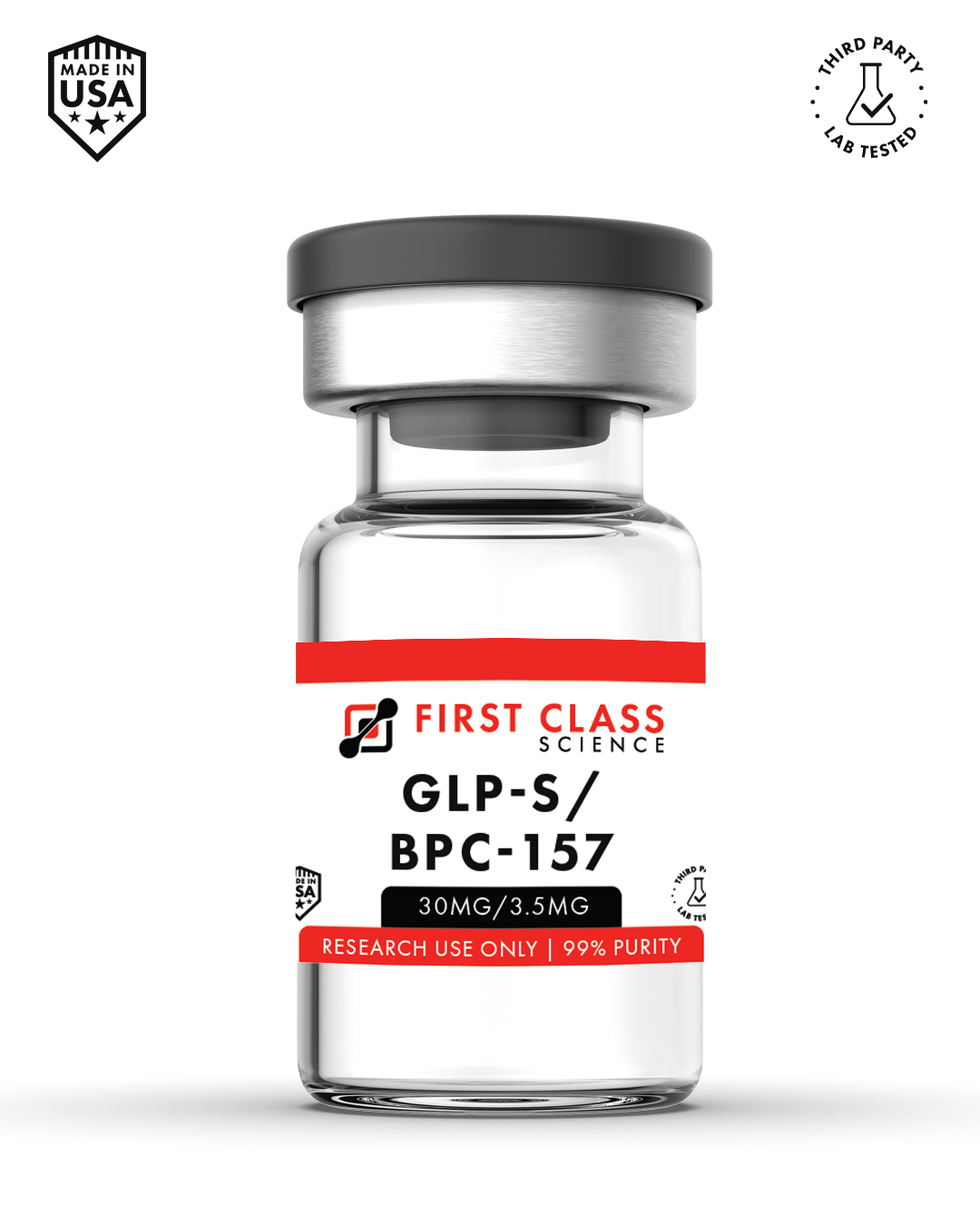
GLP-S / BPC-157 Blend (Lyophilized) – 30mg
GLP-S / BPC-157 Blend (Lyophilized) – 30mg. This blend combines Semaglutide (site code GLP-S), a GLP-1 receptor agonist studied in published metabolic research, with BPC-157, a peptide studied for its relevance to gastrointestinal and tissue-related research models. Supplied at research-grade purity for laboratory use only.
$350.00
The GLP-S / BPC-157 Blend combines two independently characterized peptides: Semaglutide (referred to on this site by the code GLP-S), a GLP-1 receptor agonist, and BPC-157, a synthetic gastric-derived peptide fragment. Each is described individually below; no published research has examined this specific combination as a single studied entity.
Product Details
- What is Semaglutide (GLP-S)?
- What is BPC-157?
- Chemical Identity
- Research Applications
What is Semaglutide (GLP-S)?
Semaglutide is a synthetic peptide analog of human glucagon-like peptide-1 (GLP-1), modified with a fatty-acid side chain reported to extend its circulating half-life via albumin binding. Published clinical research has examined semaglutide’s relationship to glycemic control, appetite-regulation measures, and body-weight outcomes in study populations.
What is BPC-157?
BPC-157 is a synthetic pentadecapeptide corresponding to a partial sequence of a protein reported to occur naturally in human gastric juice. Preclinical animal research has examined BPC-157’s relevance to gastrointestinal tissue and ulcer-healing models, as well as tendon, ligament, and muscle tissue research.
| Semaglutide — CAS Number | 910463-68-2 |
| Semaglutide — Molecular Formula | C187H291N45O59 |
| Semaglutide — Molecular Weight | 4113.6 g/mol |
| BPC-157 — CAS Number | 137525-51-0 |
| BPC-157 — Molecular Formula | C62H98N16O22 |
| BPC-157 — Molecular Weight | 1419.6 g/mol |
Purity & Quality
First Class Science supplies this blend at research-grade (99%) purity, verified by independent third-party HPLC testing and mass spectrometry. A Certificate of Analysis is available for every batch at https://firstclassscience.com/certificate-of-analysis/.
Storage: Store lyophilized compound at −20°C for long-term stability. Refrigerate at 2–8°C after reconstitution and use within 4–6 weeks.
Important: This item is manufactured strictly for research purposes. It is not intended for human or veterinary use and is distributed solely for laboratory and scientific investigation.
Research Applications
Semaglutide — GLP-1 Receptor & Metabolic Research
Published clinical trials have examined semaglutide’s effect on HbA1c, body weight, and appetite-related measures in study participants over extended treatment periods, reporting reductions across these measures relative to placebo. Study authors attribute these effects to GLP-1-receptor-mediated changes in gastric emptying, satiety signaling, and insulin secretion observed in the models and populations studied.
BPC-157 — Gastrointestinal & Tissue-Repair Research
Animal-model research has examined BPC-157’s relevance to gastric and intestinal ulcer models, reporting accelerated healing measures in tested rodents, along with separate work in tendon and muscle injury models examining tissue-repair and angiogenesis-related signaling. Study authors note that much of this literature originates from a limited number of research groups and would benefit from independent replication.
Combined Use in Research Settings
Researchers combine peptides such as GLP-S and BPC-157 to study metabolic-signaling and tissue-repair pathways in parallel within the same experimental protocol; no published study has evaluated the two dosed together as a single formulation.
Disclaimer: The research summarized above is drawn from third-party published studies conducted in animal, in vitro, or non-U.S. clinical contexts. It is provided for research and educational reference only and does not describe an intended use, effect, or benefit of this product for any person or animal.
⊗ ALL ITEMS ARE SOLD FOR RESEARCH USE ONLY. This category covers strictly in vitro laboratory testing and scientific experimentation. Content on this site is for education only and does not authorize human or animal use of any kind, which is prohibited by law. Only trained, licensed professionals should handle these materials. Nothing sold here qualifies as a drug, food, or cosmetic, and none of it may be labeled, advertised, or used as such.