

Product Usage: For Research Use Only – Not for Human or Veterinary Use
This product is not a drug, food, cosmetic, or dietary supplement and has not been evaluated by the FDA. It is strictly intended for in vitro research by qualified professionals. Any use in humans or animals is strictly prohibited and may violate federal, state, or local laws, including the Federal Food, Drug, and Cosmetic Act. No therapeutic or diagnostic application is implied or permitted. The purchaser assumes all responsibility for compliance with applicable regulations.
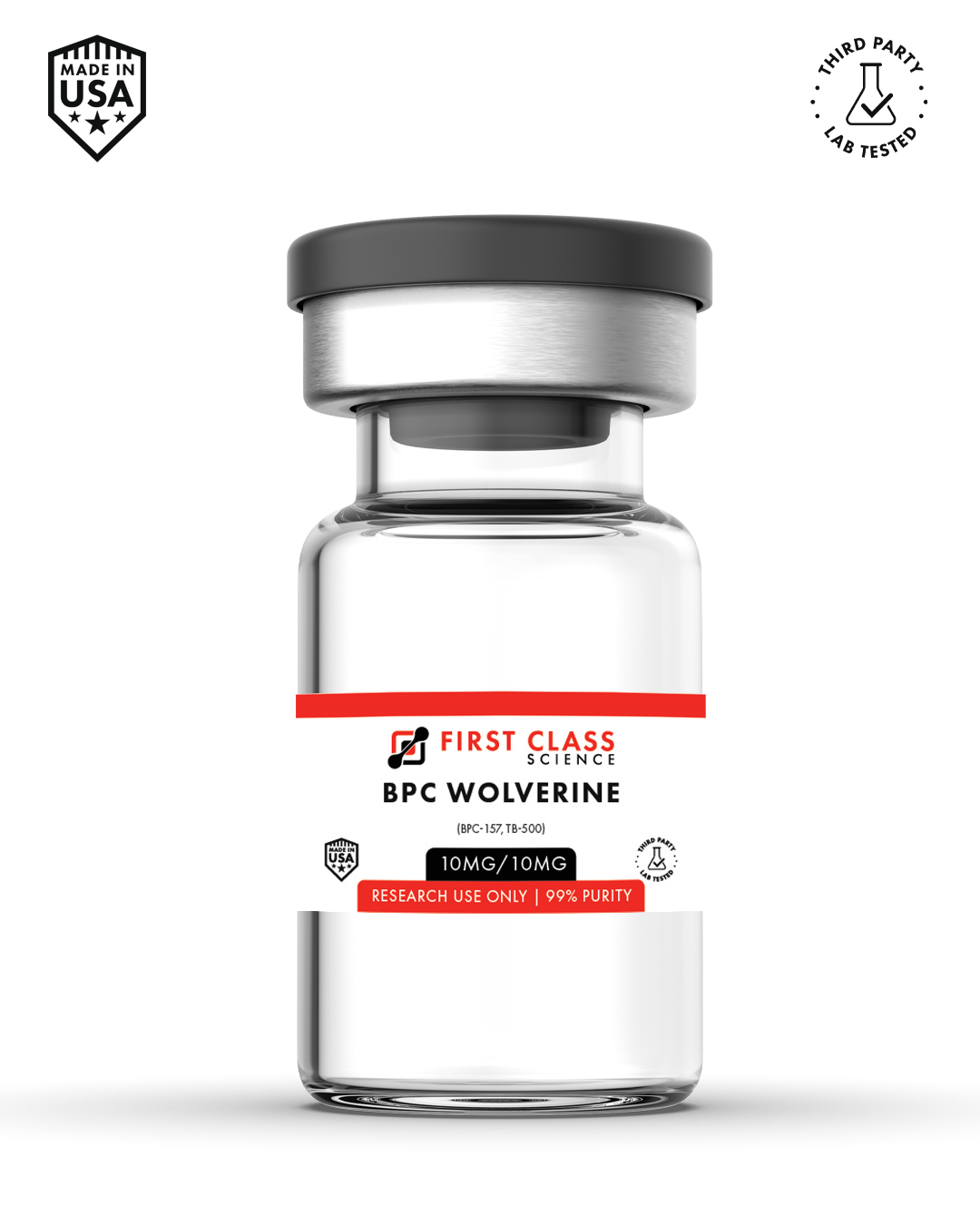
BPC Wolverine – 10mg / 10mg
Lyophilized *MUST BE RECONSTITUTED* — two 10mg vials.
BPC Wolverine is First Class Science’s branded name for BPC-157, a synthetic peptide studied extensively in animal models of tissue and gastrointestinal repair. Research has associated it with VEGFR2/Akt-eNOS and ERK1/2 signaling activity linked to angiogenesis and collagen-related tissue-repair processes. Supplied at research-grade purity for laboratory use only.
$275.00
The BPC Wolverine 10mg research peptide is First Class Science’s branded name for BPC-157, supplied as two separate 10mg lyophilized vials in a single order — the product name references the peptide’s reputation in research circles rather than indicating any additional or undisclosed ingredient. This listing contains BPC-157 only; it is not a blend with TB-500 or any other peptide. It is a synthetic peptide derived from a partial sequence identified in gastric-juice protein research, studied extensively in animal models of tissue-repair and gastrointestinal signaling pathways. This page is a research-reference summary for laboratory professionals sourcing this BPC-157 research peptide for in vitro and non-clinical investigation — it is not a guide to human or animal use.
In this reference:
- What Is the BPC Wolverine 10mg Research Peptide?
- Proposed Mechanism of Action
- Chemical Identity
- Purity, Storage & Quality
- Research Applications
- Vascular & Major-Vessel-Occlusion Research
- What the Human Evidence Shows
- Compared to Related Research Compounds
- Frequently Asked Questions
What Is the BPC Wolverine 10mg Research Peptide?
“BPC Wolverine” is a brand name First Class Science uses for its double-vial format of the BPC-157 research peptide: two 10mg vials of the same lyophilized BPC-157 supplied together in one order, rather than a single vial. Researchers sometimes assume a “Wolverine”-branded peptide product implies a multi-compound blend, since other suppliers use similar naming for BPC-157/TB-500 combination products — that is not the case here. This specific listing is BPC-157 alone, at 10mg per vial, packaged as a two-vial set for laboratories that need a larger total quantity per order without purchasing multiple separate listings.
BPC-157 itself originated from research into endogenous gastric-protective factors and has since become one of the most extensively studied research peptides in the preclinical literature, with a research base concentrated largely in work originating from a research group at the University of Zagreb, Croatia, led principally by Predrag Sikiric. The summary below reflects that published preclinical literature and is provided for research reference only.
It is important for researchers to understand what this body of literature does, and does not, establish. The overwhelming majority of BPC-157 studies are conducted in rodent or in vitro models. As detailed further down this page, controlled human clinical trials are effectively absent from the published record, and study authors themselves frequently note that the compound’s precise molecular target has not been definitively established.
Proposed Mechanism of Action
In vitro and animal-model studies indicate BPC-157 is associated with VEGFR2 (vascular endothelial growth factor receptor 2) activation and subsequent engagement of the Akt-eNOS pathway, a route linked to nitric-oxide-mediated vascular signaling and new-vessel formation. A 2022 peer-reviewed analysis in World Journal of Gastroenterology examined this VEGFR2-Akt-eNOS signaling axis specifically in rodent models of major-vessel occlusion, proposing it as a candidate explanation for BPC-157’s reported effects on collateral-vessel recruitment following vascular injury (Sikiric et al., 2022 — PMC8793015).
Separate research has reported BPC-157’s association with ERK1/2 signaling activity, a pathway researchers connect to fibroblast activity and collagen-related processes observed in tissue-repair models. Other proposed mechanisms in the published literature include modulation of the dopaminergic and serotonergic systems and interaction with the prostaglandin pathway.
No single receptor or binding target has been isolated and confirmed as BPC-157’s primary mechanism; the peptide’s activity profile in published models remains, in the authors’ own words, incompletely characterized at the molecular level. Rodent studies examining the fibroblast growth factor receptor (FGFR1) pathway have reported that co-administration of an FGFR1 inhibitor attenuated several of the healing-related measures otherwise associated with the peptide in those models, which authors cite as indirect support for FGFR1 involvement — though this remains one candidate pathway among several proposed, not a confirmed mechanism.
Researchers evaluating the BPC Wolverine 10mg research peptide for a given protocol should treat every mechanistic claim in this section as a proposed explanation drawn from a specific published study, not an established pharmacological fact. These findings come from preclinical (in vitro or animal) research only and have not been established in human subjects.
Chemical Identity
| CAS Number | 137525-51-0 |
| Sequence | Gly-Glu-Pro-Pro-Pro-Gly-Lys-Pro-Ala-Asp-Asp-Ala-Gly-Leu-Val |
| Molecular Formula | C62H98N16O22 |
| Molecular Weight | 1419.53 g/mol |
| Format | Two (2) lyophilized 10mg vials per order |
Purity, Storage & Quality
First Class Science supplies BPC Wolverine (BPC-157) at 99% purity, verified by independent third-party HPLC testing and mass spectrometry. A Certificate of Analysis is available for every batch at our Certificate of Analysis page, listing each vial’s purity result, molecular-weight confirmation, and test date.
Store lyophilized compound at −20°C for long-term stability; unopened and properly stored, lyophilized peptide is generally stable for extended periods. After reconstitution with bacteriostatic or sterile water, refrigerate at 2–8°C and use within 4–6 weeks. Avoid repeated freeze-thaw cycles and prolonged exposure to light or room-temperature conditions, both of which are associated with accelerated peptide degradation in handling literature. Because this listing supplies two vials, laboratories should reconstitute only the vial currently in use and keep the second vial lyophilized and frozen until needed, minimizing unnecessary freeze-thaw exposure to the unused vial and preserving its stability for a later study session.
Important: This item is manufactured strictly for research purposes. It is not intended for human or veterinary use and is distributed solely for laboratory and scientific investigation.
Quality Control Methodology
Each vial in this listing undergoes independent third-party testing before release. High-performance liquid chromatography (HPLC) confirms purity by measuring the proportion of target peptide relative to any synthesis by-products or degradation fragments. Mass spectrometry separately confirms molecular identity, verifying that the measured mass matches the expected 1419.53 g/mol molecular weight of BPC-157. Both results are recorded on the published Certificate of Analysis for each batch.
Who Sources This Research Peptide
Buyers of this BPC-157 research peptide are university and academic research laboratories, contract research organizations (CROs), and biotechnology R&D teams running in vitro and animal-model studies on tissue-repair and vascular-signaling pathways. The two-vial format is commonly chosen by labs running replicate studies or higher-volume protocols that would otherwise require multiple separate orders. First Class Science requires that all research-peptide orders be placed by parties who acknowledge and agree to the research-use-only terms stated on this page prior to purchase.
Institutional buyers frequently request the Certificate of Analysis for a specific lot in advance of purchase for their own internal quality-assurance records, and First Class Science makes this available on request in addition to the standing copy already published for each batch on the site.
Common Research Study Designs
Published studies referenced throughout this page typically fall into one of several designs: controlled rodent injury models comparing treated and untreated groups on a defined healing-rate or biomechanical outcome measure, and in vitro cell-culture assays examining a specific signaling pathway in isolation. Understanding which design underlies a given finding is important context for interpreting the strength of any individual claim in the literature, since a rodent-model finding and a controlled human trial finding carry very different evidentiary weight — a distinction covered in more detail in the human-evidence section below.
Research Applications
The published literature on BPC-157 spans several distinct research areas. Each is summarized below strictly as a description of what has been studied in animal and in vitro models — not as a claim about effects in humans.
Gastrointestinal Research Models
Published research in animal models has examined BPC-157’s relationship to gastric-ulcer healing and gastrointestinal-lesion recovery, with study authors reporting protective effects on gastric-mucosal markers in tested subjects relative to untreated controls. Researchers use these models to study mucosal-repair pathway signaling, an area representing the compound’s original research context.
Tendon, Ligament & Muscle Research
Animal-model research has examined BPC-157’s association with tendon-to-bone healing, ligament-repair markers, and muscle-injury recovery, with study authors reporting accelerated healing indicators in tested models compared to controls, including transected and crush-injury models. This line of research has made BPC-157 a frequently used tool compound in tissue-repair-pathway studies.
Cellular Signaling & Angiogenesis Research
In vitro and animal studies have examined BPC-157’s relationship to markers of blood-vessel formation (angiogenesis) and cell-migration pathways, with researchers proposing that these effects contribute to the tissue-repair patterns observed across the broader body of BPC-157 research.
CNS & Neuroprotection-Related Research
Separate preclinical research has examined BPC-157’s association with neuroprotective measures in animal models of traumatic brain and spinal-cord injury, and its reported interaction with dopaminergic and serotonergic signaling systems in tested models. This research area remains earlier-stage relative to the gastrointestinal and connective-tissue literature, with fewer independent replications published to date.
Vascular & Major-Vessel-Occlusion Research
A more recent line of published research has focused specifically on BPC-157’s association with recovery measures following major-vessel occlusion. The 2022 World Journal of Gastroenterology paper referenced above examined rodent models of Pringle-maneuver-induced ischemia-reperfusion injury, major-vessel occlusion, and Budd-Chiari-syndrome-like presentations, reporting that BPC-157 administration was associated with resolution of vascular-disturbance measures and improved recovery indicators relative to control groups in these specific animal models (Sikiric et al., World J Gastroenterol, 2022 Jan 7;28(1):23-46; PMID 35125818; DOI 10.3748/wjg.v28.i1.23).
This vascular research thread is mechanistically linked to the angiogenesis findings noted above, with study authors proposing a shared VEGFR2-Akt-eNOS pathway as a candidate explanation across both research areas. As with all findings summarized on this page, these results are specific to the animal models tested and have not been established in controlled human studies.
What the Human Evidence Shows
Researchers evaluating BPC-157 should be aware of an important gap between the animal literature summarized above and the human evidence base. A 2025 systematic review published in the HSS Journal (Vasireddi et al., “Emerging Use of BPC-157 in Orthopaedic Sports Medicine: A Systematic Review”) examined the full published literature on BPC-157 in a musculoskeletal research context and found that 35 of the 36 studies identified were preclinical (animal or in vitro) in design. Only one small human study was identified — a retrospective chart review of 12 patients, of whom 7 reported symptom relief lasting more than six months.
The same review reports that no controlled human clinical trials of BPC-157 were found in the published literature, and that no formal human safety data were identified. This is consistent with BPC-157’s regulatory status: it is not an FDA-approved drug, has not completed human clinical trials, and is not evaluated by the FDA for safety or efficacy in humans or animals for any condition.
We include this section because researchers deserve an accurate picture of the evidence base, not just the parts that sound most compelling. The strength of the rodent and in vitro literature on BPC-157 is real and well-documented; the near-total absence of controlled human data is equally real and belongs in the same conversation. A researcher citing this literature in a grant application, protocol design, or comparative study should characterize these findings accurately as preclinical, animal-model results.
Compared to Related Research Compounds
BPC-157 is frequently studied alongside, or in combination with, other tissue-repair-associated research peptides. First Class Science supplies several related preparations for researchers running comparative studies:
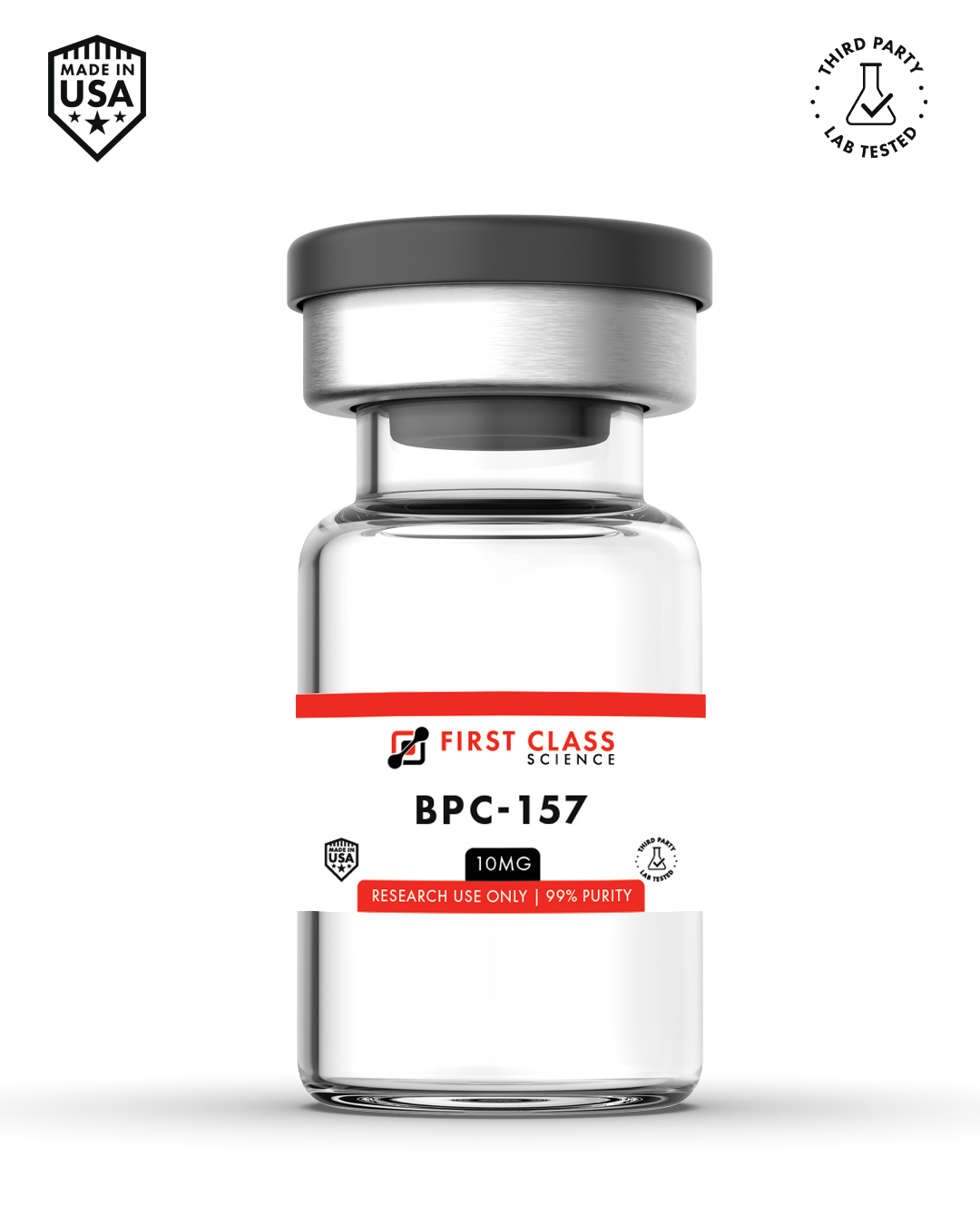
BPC-157 – 10mg is the same research peptide in a single-vial format, for laboratories that need only one 10mg vial per order rather than this listing’s two-vial set.
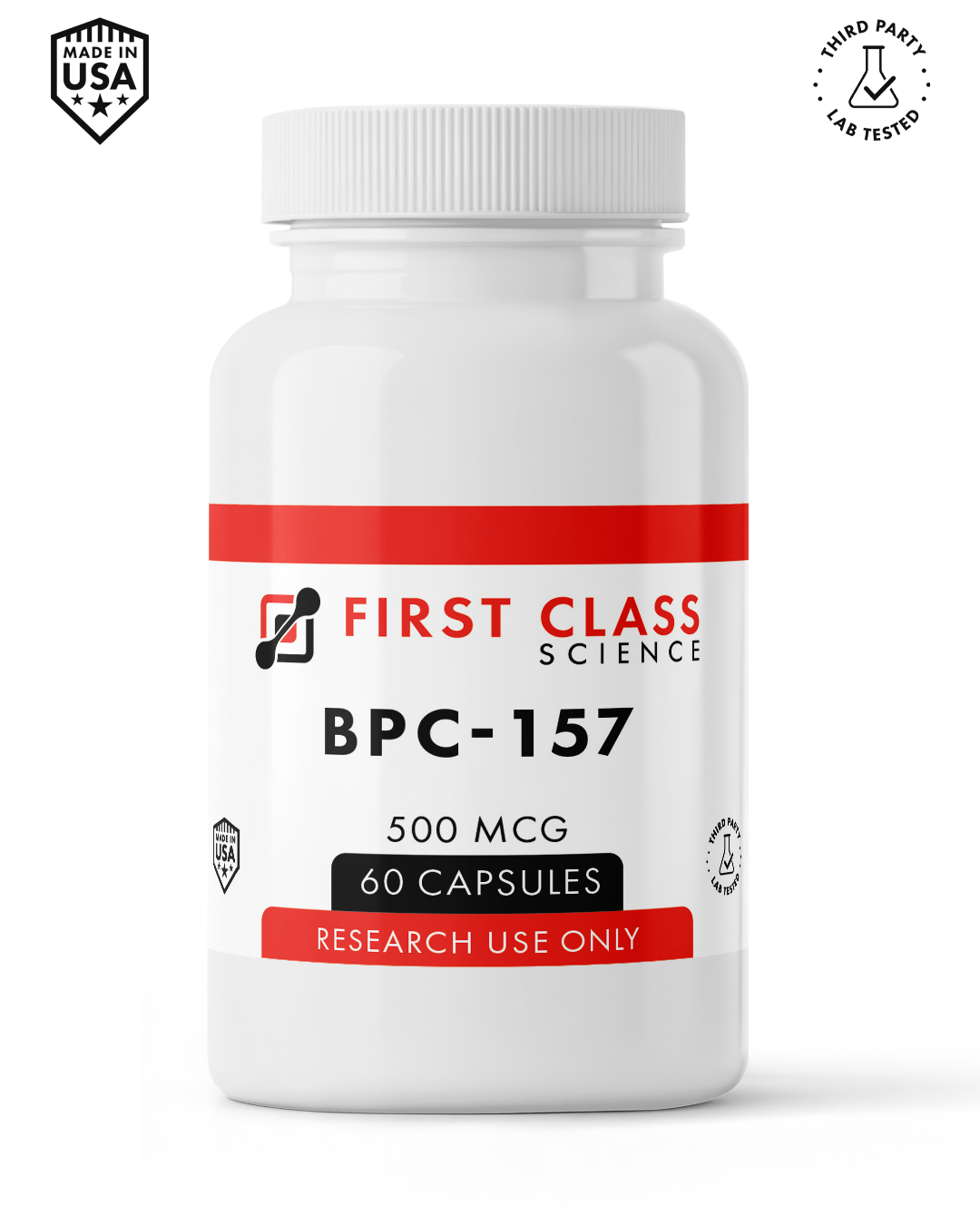
BPC-157 Capsules – 500mcg supply the same research peptide in an oral-research format for laboratories whose protocols call for oral-route administration models.
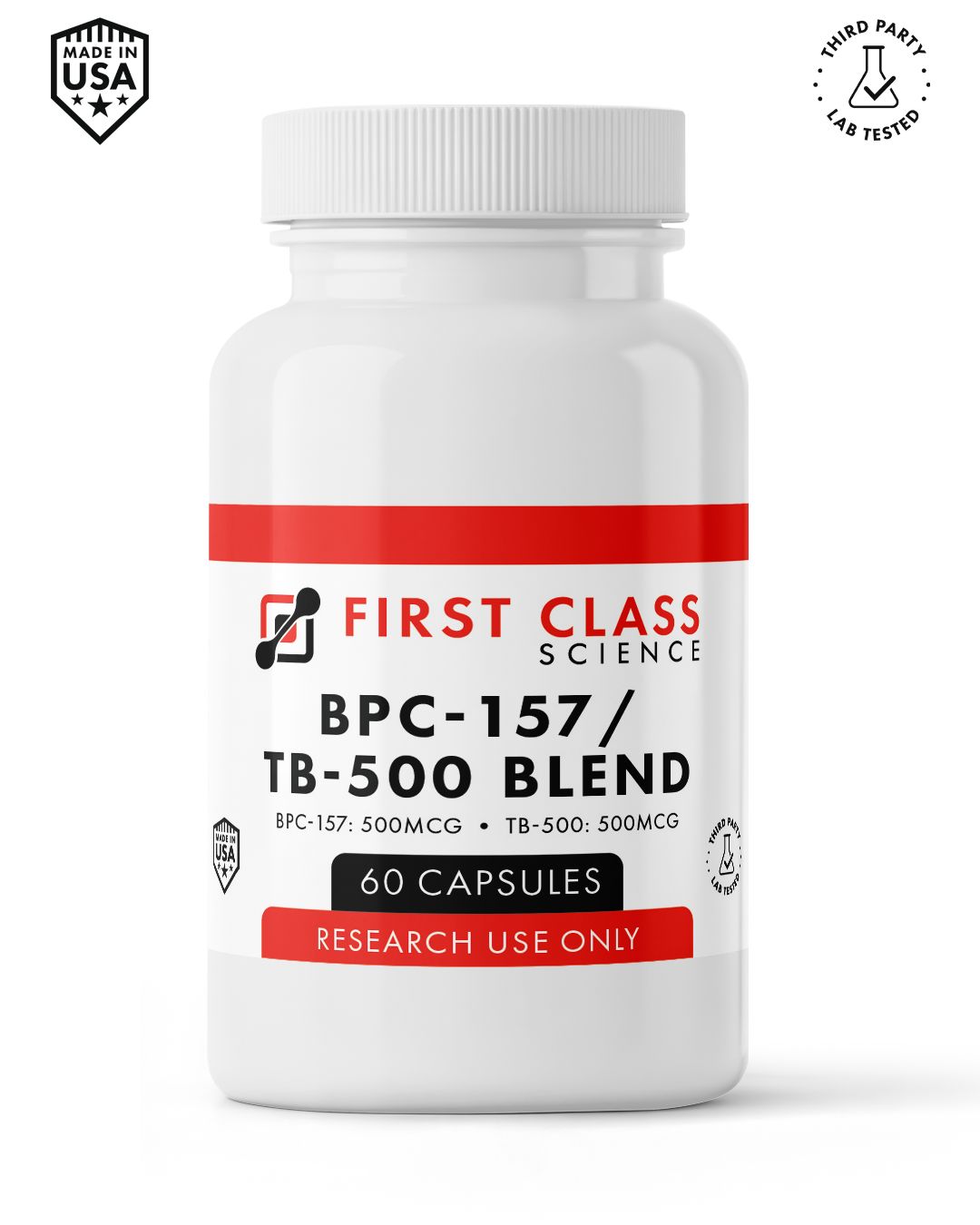
BPC-157/TB-500 Blend Capsules – 1mg combine BPC-157 with TB-500 (Thymosin Beta-4), another peptide studied in tissue-repair and angiogenesis contexts — this is First Class Science’s actual TB-500 combination product, distinct from BPC Wolverine.
Each of these related preparations carries its own Certificate of Analysis and is subject to the same research-use-only terms described on this page.
Laboratories choosing between the single-vial BPC-157 – 10mg listing and this BPC Wolverine 10mg research peptide two-vial set typically base that decision on order volume: researchers running a single short study often prefer the single vial, while labs running replicate studies, multiple cohorts, or higher-volume protocols choose the two-vial Wolverine format to reduce the number of separate orders and shipments required.
Frequently Asked Questions
Is BPC Wolverine a blend of BPC-157 and TB-500?
No. Despite the “Wolverine” brand name, which some other suppliers use for BPC-157/TB-500 blends, this First Class Science listing contains BPC-157 only, supplied as two separate 10mg vials.
How many vials come in this order?
This listing supplies two (2) lyophilized 10mg BPC-157 vials per order — reconstitute and use one at a time, keeping the second vial lyophilized and frozen until it’s needed for a subsequent study session.
What is the purity of this BPC-157 research peptide?
Every vial is independently verified at 99% purity via third-party HPLC and mass-spectrometry testing, with a Certificate of Analysis published for each batch.
How should this research peptide be stored?
Store the lyophilized vials at −20°C. Reconstitute one vial at a time with bacteriostatic or sterile water; refrigerate the reconstituted vial at 2–8°C and use within 4–6 weeks.
Is BPC-157 approved for human or animal use?
No. BPC-157 is not an FDA-approved drug and has not completed controlled human clinical trials. It is sold exclusively for in vitro laboratory research and scientific investigation.
Does the published research on BPC-157 include human clinical trials?
No. As detailed in the “What the Human Evidence Shows” section above, a 2025 systematic review found that 35 of 36 published studies on BPC-157 were preclinical, with only one small retrospective human chart review identified and no controlled human clinical trials in the published record.
What does the Certificate of Analysis show?
The Certificate of Analysis published for each batch shows the HPLC purity result, mass-spectrometry molecular-weight confirmation, lot number, and test date, allowing researchers to independently verify the identity and purity of the specific vials they receive.
Shipping, Handling & Compliance
This BPC Wolverine listing ships as two lyophilized-powder vials in sealed glass containers, packaged to maintain cold-chain integrity in transit where applicable. All orders are subject to the research-use-only terms stated on this page, and First Class Science does not sell this or any other research peptide for human or veterinary administration under any circumstance.
Order tracking, batch-specific documentation requests, and general product questions can be directed to First Class Science customer support, which can confirm current lead times and any destination-specific documentation a receiving institution may require for its own compliance records. Shipping availability and any import restrictions for research peptides vary by destination country and are subject to change; researchers should confirm their local import regulations for research-use-only compounds before ordering.
Disclaimer: The research summarized above is drawn from third-party published studies conducted in animal, in vitro, or clinical research contexts. It is provided for research and educational reference only and does not describe an intended use, effect, or benefit of this product for any person or animal.
⊗ ALL ITEMS ARE SOLD FOR RESEARCH USE ONLY. This category covers strictly in vitro laboratory testing and scientific experimentation. Content on this site is for education only and does not authorize human or animal use of any kind, which is prohibited by law. Only trained, licensed professionals should handle these materials. Nothing sold here qualifies as a drug, food, or cosmetic, and none of it may be labeled, advertised, or used as such.