

Product Usage: For Research Use Only – Not for Human or Veterinary Use
This product is not a drug, food, cosmetic, or dietary supplement and has not been evaluated by the FDA. It is strictly intended for in vitro research by qualified professionals. Any use in humans or animals is strictly prohibited and may violate federal, state, or local laws, including the Federal Food, Drug, and Cosmetic Act. No therapeutic or diagnostic application is implied or permitted. The purchaser assumes all responsibility for compliance with applicable regulations.
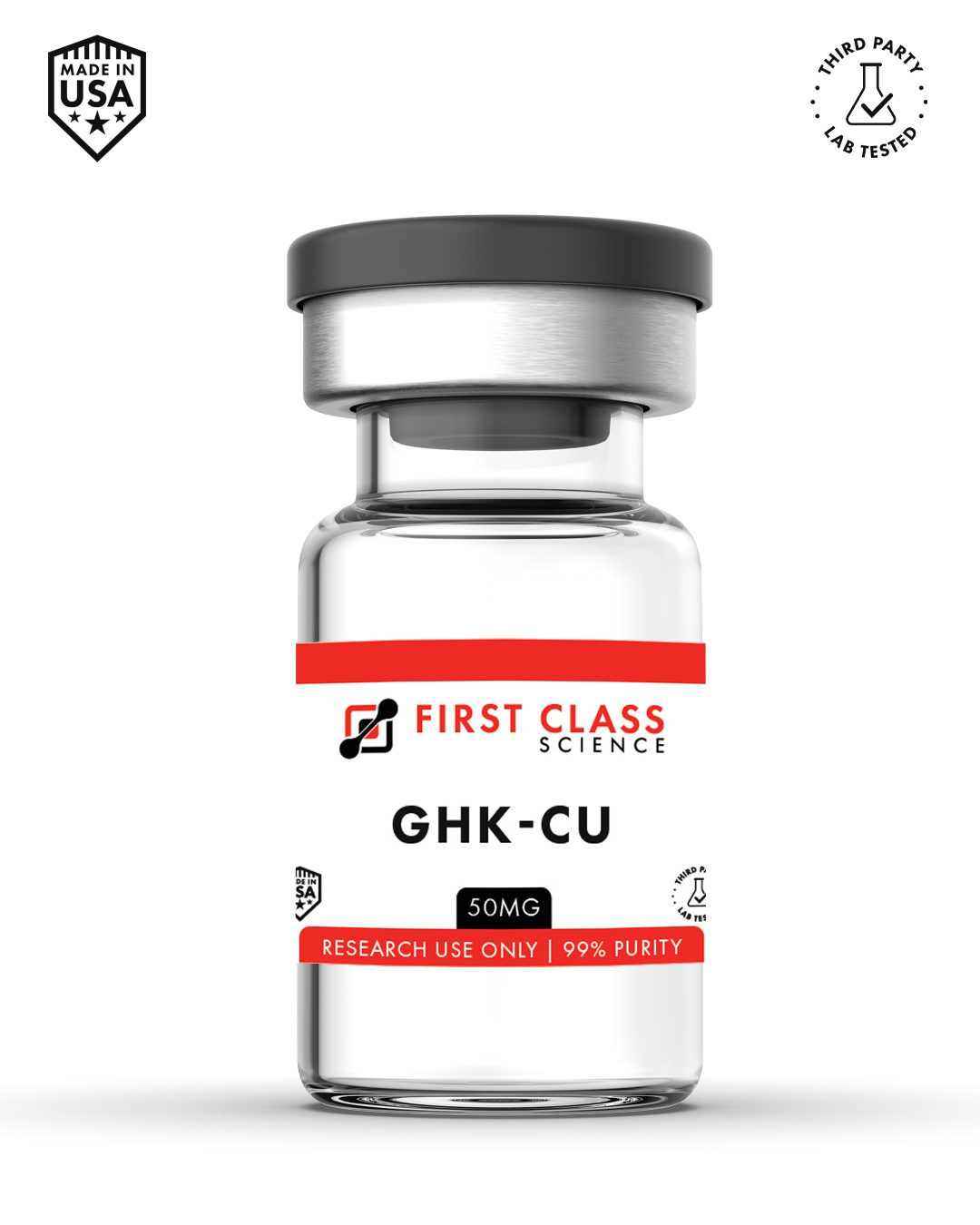
GHK-Cu – 50mg
GHK-Cu 50mg research peptide — lyophilized, 99% purity copper-binding tripeptide studied in gene-expression and dermal-tissue-remodeling research models. Certificate of Analysis available. RUO only.
$200.00
GHK-Cu 50mg research peptide is a lyophilized, copper-binding tripeptide vial supplied by First Class Science for laboratory and non-clinical research use only. This 50mg vial format is intended for research groups running standard-scale in vitro or animal-model protocols examining GHK-Cu’s studied interactions with tissue-remodeling, gene-expression, and dermal-signaling pathways. This page is a research-reference summary for laboratory professionals sourcing this GHK-Cu 50mg research peptide — it is not a guide to human or animal use.
In this reference:
- What Is GHK-Cu?
- Proposed Mechanism of Action
- Chemical Identity
- Purity, Storage & Quality
- Research Applications
- What the Human Evidence Shows
- Compared to Related Research Compounds
- Frequently Asked Questions
What Is GHK-Cu?
GHK-Cu is a naturally occurring copper-binding tripeptide — glycyl-L-histidyl-L-lysine (Gly-His-Lys), complexed with a Cu2+ ion — first isolated from human plasma by researcher Loren Pickart in the 1970s. Circulating GHK-Cu concentration has been reported in the published literature to decline with age, an observation that helped drive several decades of laboratory interest in the peptide’s copper-transport and gene-modulation properties.
This GHK-Cu 50mg research peptide vial supplies the compound in lyophilized (freeze-dried) powder form, reconstituted by the receiving laboratory according to its own protocol. Published research has examined GHK-Cu’s interaction with gene-expression, extracellular-matrix, and dermal-signaling pathways in cell-culture and animal models. The peptide’s small size and strong copper affinity have made it a frequently used tool compound in laboratories studying copper-dependent enzyme activity and tissue-remodeling signaling.
It is important for researchers to understand what this body of literature does, and does not, establish. As detailed further down this page, the majority of GHK-Cu’s mechanistic and efficacy data comes from in vitro and animal-model work; controlled human clinical trials of the isolated research compound are limited, and this product is not evaluated or approved by the FDA for any use in humans or animals.
Proposed Mechanism of Action
Study authors have proposed that GHK-Cu’s reported activity in cell and animal models relates to its role as a small, mobile copper carrier that influences gene transcription broadly across the tested genome. A 2015 peer-reviewed review in BioMed Research International reported that GHK-Cu modulated activity of both matrix metalloproteinases and their tissue inhibitors (TIMP-1 and TIMP-2), which study authors proposed functions as a regulatory checkpoint in tissue-remodeling and wound-repair signaling observed in the animal models tested (Pickart, Vasquez-Soltero & Margolina, 2015 — PMC4508379).
A separate 2018 review in International Journal of Molecular Sciences compiled gene-expression research reporting that GHK-Cu, at nanomolar concentrations, was associated with changed expression of a substantial portion of the tested human genome in cell-culture models, with effects concentrated among genes tied to tissue remodeling, antioxidant response, and anti-inflammatory signaling (Pickart & Margolina, 2018 — PMC6073405).
No single receptor has been isolated and confirmed as GHK-Cu’s sole molecular target; study authors themselves describe the peptide’s broad gene-modulation profile as one candidate explanation among several proposed pathways, not an established pharmacological mechanism. Researchers should treat every mechanistic claim in this section as a proposed explanation drawn from a specific published study, not a confirmed fact.
Chemical Identity
| CAS Number | 49557-75-7 |
| Molecular Formula | C14H24CuN6O4 |
| Molecular Weight | ~403.9 g/mol |
| Sequence | Gly-His-Lys, complexed with Cu2+ |
| Vial Quantity | 50mg lyophilized peptide per vial |
Note: reported molecular formula and molecular weight for GHK-Cu vary slightly across published sources depending on salt/complex form referenced. Researchers should independently confirm identity data against the batch-specific Certificate of Analysis and PubChem entry before citing in a protocol.
Purity, Storage & Quality
First Class Science supplies this GHK-Cu 50mg research peptide vial at 99% purity, verified by independent third-party HPLC testing and mass spectrometry. A Certificate of Analysis is available for every batch at our Certificate of Analysis page, listing the specific lot’s purity result, molecular-weight confirmation, and test date.
Store the lyophilized compound at −20°C for long-term stability; unopened and properly stored, lyophilized peptide is generally stable for extended periods. After reconstitution with bacteriostatic or sterile water, refrigerate at 2–8°C and use within 4–6 weeks. Avoid repeated freeze-thaw cycles and prolonged exposure to light or room-temperature conditions, both associated with accelerated peptide degradation in handling literature.
Important: This item is manufactured strictly for research purposes. It is not intended for human or veterinary use and is distributed solely for laboratory and scientific investigation.
Quality Control Methodology
Each production batch of this GHK-Cu 50mg research peptide undergoes independent third-party testing before release. High-performance liquid chromatography (HPLC) confirms purity by measuring the proportion of target peptide relative to synthesis by-products or degradation fragments. Mass spectrometry separately confirms molecular identity, verifying that the measured mass matches the expected molecular weight of GHK-Cu. Both results are recorded on the batch’s published Certificate of Analysis, allowing researchers to independently verify the identity and purity of the material used in their protocols.
Who Sources This Research Peptide
Buyers of this GHK-Cu 50mg research peptide are university and academic research laboratories, contract research organizations (CROs), and biotechnology R&D teams running in vitro and animal-model studies on copper-peptide signaling and tissue-remodeling pathways. First Class Science requires that all research-peptide orders be placed by parties who acknowledge and agree to the research-use-only terms stated on this page prior to purchase.
Institutional buyers frequently request the Certificate of Analysis for a specific lot in advance of purchase for their own internal quality-assurance records, and First Class Science makes this available on request in addition to the standing copy published for each batch. Labs onboarding a new lot for the first time are encouraged to cross-reference the Certificate of Analysis against their own in-house identity confirmation before running a full study, particularly where a protocol depends on a precisely known starting concentration.
Research Applications
The published literature on GHK-Cu spans several distinct preclinical research areas. Each is summarized below strictly as a description of what has been studied in cell-culture and animal models — not as a claim about effects in humans.
Gene Expression & Tissue-Remodeling Research
Cell-culture research has examined GHK-Cu’s association with broad changes in gene-expression patterns, with study authors reporting that nanomolar concentrations of the peptide were linked to altered activity across genes tied to tissue remodeling, antioxidant response, and anti-inflammatory signaling in the models tested (Pickart & Margolina, 2018).
Fibroblast & Collagen Synthesis Research
In vitro fibroblast culture studies have reported that GHK-Cu at low nanomolar concentrations was associated with stimulated collagen and elastin synthesis and upregulated extracellular-matrix genes, without a corresponding increase in non-collagen protein production in the models tested. Researchers use this line of study to examine copper-dependent regulation of matrix-remodeling enzymes.
Dermal Wound-Model Research
Preclinical wound-model research has reported measures of accelerated closure rate and graft-survival improvement in tested animal models following topical or local application of GHK-Cu-containing preparations, alongside reported anti-inflammatory activity attributed to the peptide in those specific studies. This research is confined strictly to animal wound models and in vitro assays and does not establish an effect in human skin.
Angiogenesis & Metalloproteinase-Regulation Research
Separate preclinical work has examined GHK-Cu’s association with modulation of matrix metalloproteinases and their inhibitors, and with markers of new blood-vessel formation (angiogenesis) in tested animal and cell-culture models — a pathway study authors connect to the broader tissue-remodeling signaling described in the mechanism section above.
Copper Homeostasis & Enzyme-Cofactor Research
Separately from its gene-modulation profile, GHK-Cu’s research interest is connected to copper’s broader role as an essential enzymatic cofactor. Copper-dependent enzymes such as lysyl oxidase, which crosslinks collagen and elastin fibers, and superoxide dismutase (SOD), an antioxidant enzyme, are both studied in the tissue-remodeling and oxidative-stress literature. Researchers examining GHK-Cu often situate its reported activity within this larger body of copper-biochemistry research, using it as a tool compound to study copper-transport and copper-dependent enzyme regulation in cultured cells rather than as a standalone finding.
What the Human Evidence Shows
Researchers evaluating GHK-Cu should be aware of an important gap between the cell-culture and animal literature summarized above and the controlled human evidence base for the isolated research compound. Separately from this research peptide, formulated cosmetic products containing copper peptides have been studied in the dermatology and cosmetic-science literature for skin-appearance parameters — but those studies examine finished, formulated cosmetic products, not the unformulated research peptide sold on this page, and they do not establish a clinical or medical use for this product.
No controlled human clinical trials of the isolated GHK-Cu research compound establishing a disease-related use were identified in the literature reviewed for this page. This is consistent with GHK-Cu’s regulatory status: it is not an FDA-approved drug, has not completed controlled human clinical trials for any medical indication, and is not evaluated by the FDA for safety or efficacy in humans or animals for any condition.
We include this section because researchers deserve an accurate picture of the evidence base, not just the parts that sound most compelling. The cell-culture and animal-model literature on GHK-Cu’s gene-modulation and tissue-remodeling activity is real and well-documented; the absence of controlled human clinical-trial data establishing a medical use for the isolated compound is equally real and belongs in the same conversation. A researcher citing this literature in a grant application, protocol design, or comparative study should characterize these findings accurately as preclinical, in vitro or animal-model results.
Compared to Related Research Compounds
GHK-Cu is supplied by First Class Science across several dose points and formats for researchers running comparative or format-specific studies:
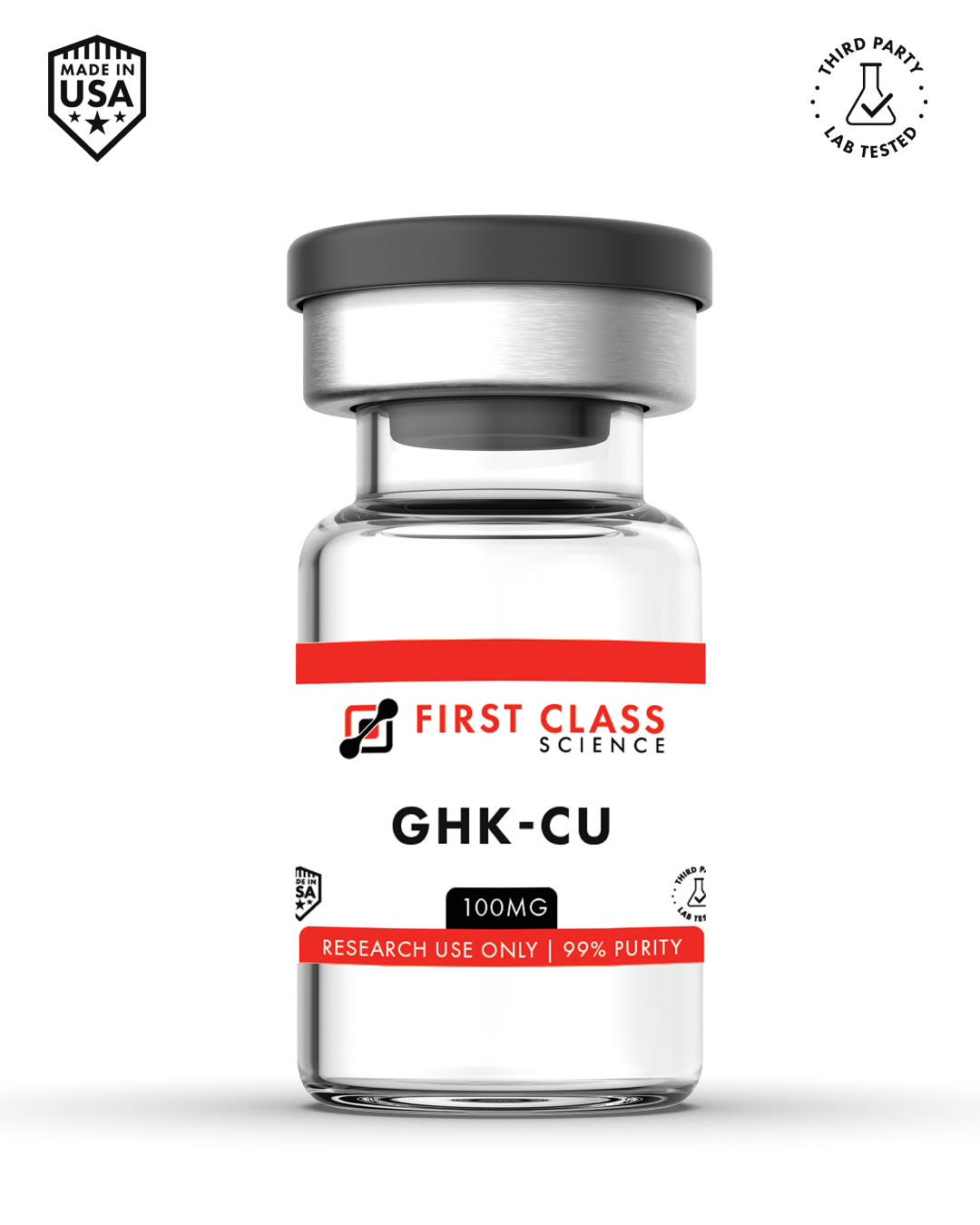
GHK-Cu – 100mg supplies the same lyophilized copper-binding tripeptide at double the total peptide mass per vial, for laboratories running higher-volume protocols or multiple replicate reconstitutions that would otherwise require ordering more than one 50mg vial.
GHK-Cu (Lyophilized) – 50mg is First Class Science’s separately listed 50mg SKU, also supplied as lyophilized powder, distinguished in the catalog primarily by packaging/pricing tier rather than a different chemical entity — see the FAQ below for the specific distinction between these two 50mg listings.
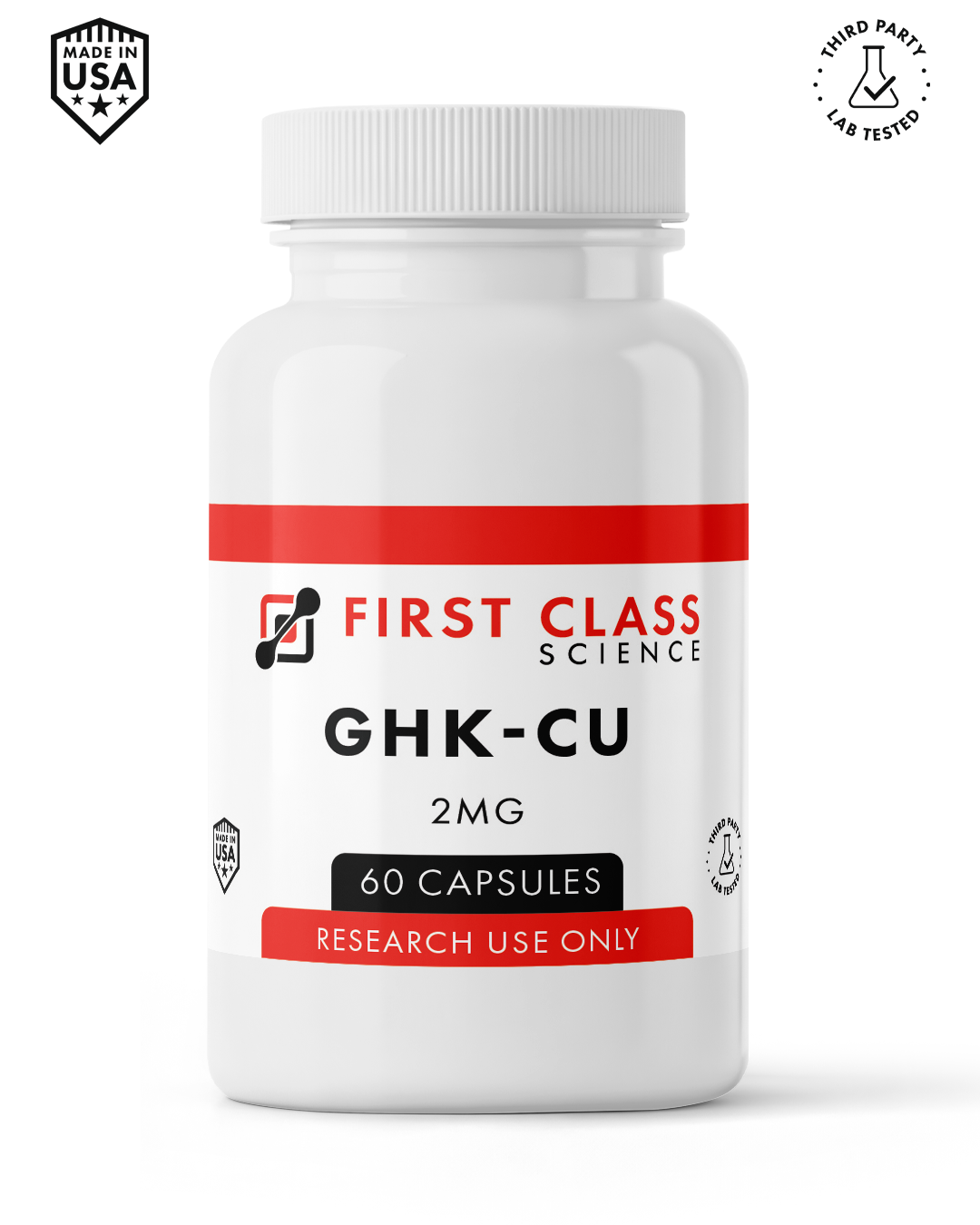
GHK-Cu Capsules – 2mg supply the same research peptide in an oral-research capsule format rather than lyophilized powder for reconstitution, for laboratories whose protocols call for oral-route administration models.
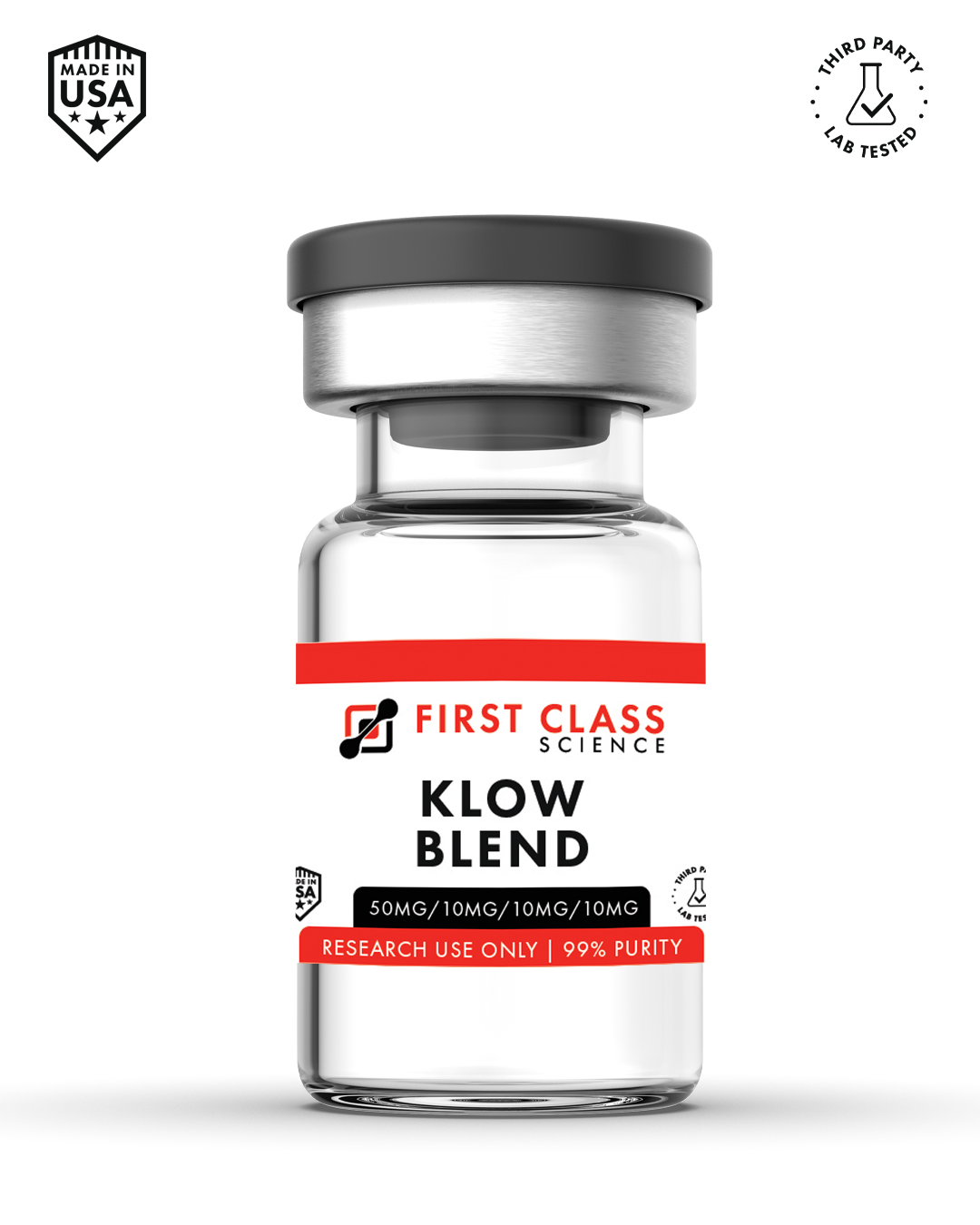
Klow Blend – 50/10/10/10mg combines this same GHK-Cu compound with BPC-157 and TB-500 in a single multi-peptide vial, for researchers modeling combined-pathway tissue-repair protocols rather than a single-compound design.
Each of these related preparations carries its own Certificate of Analysis and is subject to the same research-use-only terms described on this page. Laboratories choosing between dose points typically base that decision on total peptide mass required per protocol and the number of reconstitutions planned, rather than any difference in the compound itself.
Common Research Study Designs
Published studies referenced throughout this page typically fall into one of several designs: in vitro cell-culture assays examining gene-expression or matrix-enzyme changes following peptide exposure, and controlled rodent or rabbit wound-model studies comparing treated and untreated groups on a defined healing-rate or biomechanical outcome measure. Understanding which design underlies a given finding is important context for interpreting the strength of any individual claim in the literature, since a cell-culture finding and a controlled animal-model finding carry different evidentiary weight — and both carry different weight again from the still-limited controlled human data discussed above.
Concentration-response designs, in which cultured cells or tissue samples are exposed to a range of GHK-Cu concentrations to identify a dose-dependent effect on a given marker, are also common across the gene-expression and fibroblast literature summarized on this page, and are one reason researchers document exact lot and vial-size information alongside their reconstitution calculations. Researchers replicating a published design should independently confirm the original study’s exact peptide concentration, exposure duration, and model system before drawing any comparison to their own results, since small protocol differences can materially change outcomes in this literature.
Frequently Asked Questions
What is the purity of this GHK-Cu 50mg research peptide?
Every batch is independently verified at 99% purity via third-party HPLC and mass-spectrometry testing, with a Certificate of Analysis published for each lot.
How should GHK-Cu research peptide be stored?
Store the lyophilized powder at −20°C. After reconstitution, refrigerate at 2–8°C and use within 4–6 weeks; avoid repeated freeze-thaw cycles.
How does this GHK-Cu 50mg listing differ from the 100mg vial?
The two listings supply the identical GHK-Cu compound at the same purity standard; the difference is total peptide mass per vial (50mg versus 100mg), which changes how many reconstitutions or replicate protocols a single vial can support.
How does this listing differ from the “GHK-Cu (Lyophilized) – 50mg” SKU?
Both listings supply the same 50mg GHK-Cu compound in lyophilized powder form, as is standard for this class of research peptide. They are maintained as separate catalog SKUs with their own pricing; researchers should confirm current lot documentation for whichever SKU they order, as First Class Science does not represent a chemical difference between the two.
Is GHK-Cu approved for human or animal use?
No. GHK-Cu as sold here is not an FDA-approved drug and has not completed controlled human clinical trials for any medical indication. It is sold exclusively for in vitro and animal-model laboratory research.
What does the Certificate of Analysis show?
The Certificate of Analysis published for each batch shows the HPLC purity result, mass-spectrometry molecular-weight confirmation, lot number, and test date, allowing researchers to independently verify the identity and purity of the specific batch they receive.
Can GHK-Cu research peptide be combined with other compounds in a study design?
Some published research examines GHK-Cu alongside other tissue-repair-associated peptides in combined-pathway models; First Class Science also supplies a pre-blended multi-peptide vial (see Klow Blend above) for laboratories whose protocol calls for a fixed combination ratio rather than separately sourced single-compound vials.
Shipping, Handling & Compliance
This GHK-Cu 50mg research peptide ships as a lyophilized powder in a sealed glass vial, packaged to maintain cold-chain integrity in transit where applicable. All orders are subject to the research-use-only terms stated on this page, and First Class Science does not sell this or any other research peptide for human or veterinary administration under any circumstance.
Order tracking, batch-specific documentation requests, and general product questions can be directed to First Class Science customer support, which can confirm current lead times and any destination-specific documentation a receiving institution may require for its own compliance records. Shipping availability and any import restrictions for research peptides vary by destination country and are subject to change; researchers should confirm their local import regulations for research-use-only compounds before ordering.
Disclaimer: The research summarized above is drawn from third-party published studies conducted in animal, in vitro, or clinical research contexts. It is provided for research and educational reference only and does not describe an intended use, effect, or benefit of this product for any person or animal.
⊗ ALL ITEMS ARE SOLD FOR RESEARCH USE ONLY. This category covers strictly in vitro laboratory testing and scientific experimentation. Content on this site is for education only and does not authorize human or animal use of any kind, which is prohibited by law. Only trained, licensed professionals should handle these materials. Nothing sold here qualifies as a drug, food, or cosmetic, and none of it may be labeled, advertised, or used as such.