

Product Usage: For Research Use Only – Not for Human or Veterinary Use
This product is not a drug, food, cosmetic, or dietary supplement and has not been evaluated by the FDA. It is strictly intended for in vitro research by qualified professionals. Any use in humans or animals is strictly prohibited and may violate federal, state, or local laws, including the Federal Food, Drug, and Cosmetic Act. No therapeutic or diagnostic application is implied or permitted. The purchaser assumes all responsibility for compliance with applicable regulations.
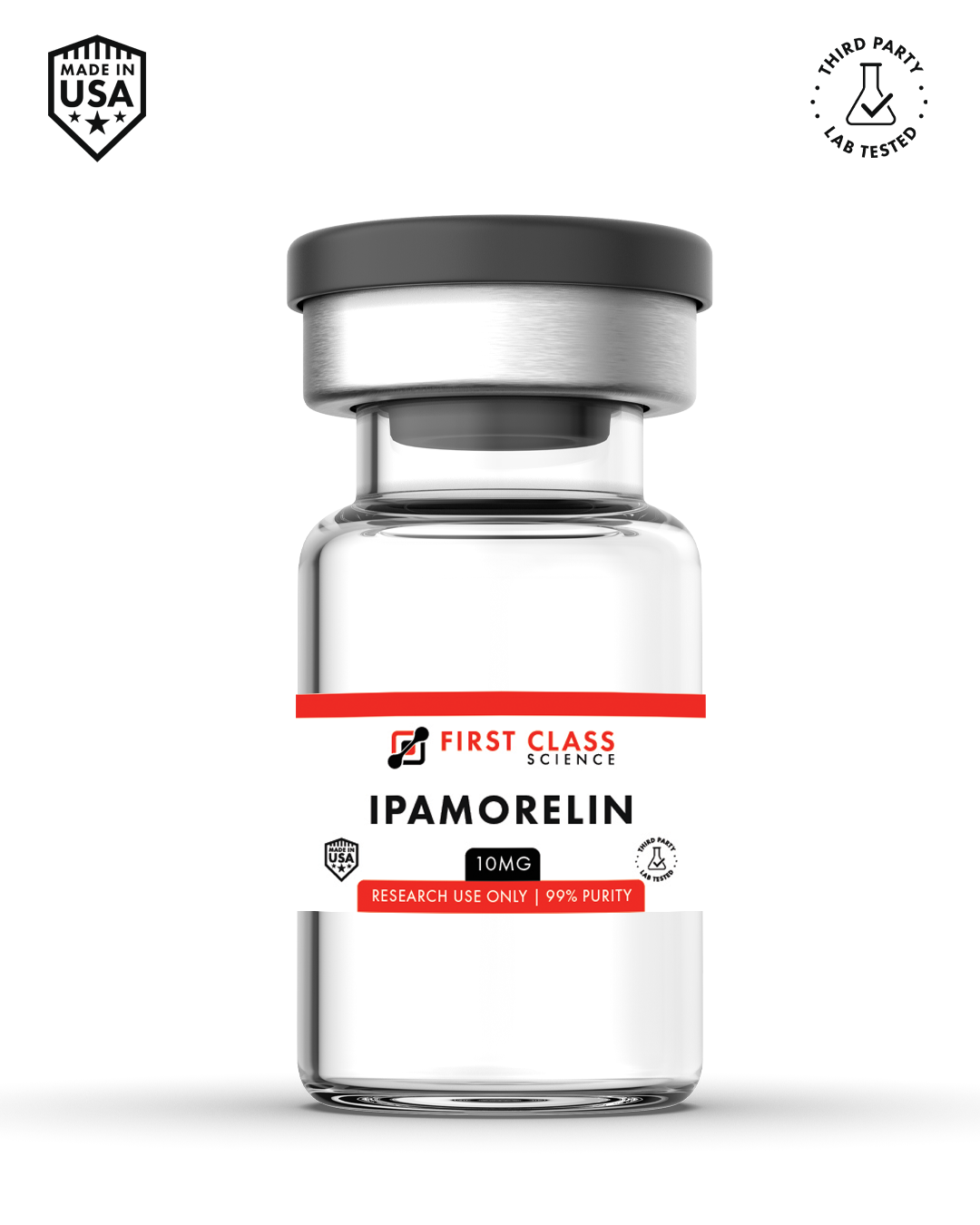
Ipamorelin – 10mg
10mg – Lyophilized MUST BE RECONSTITUTED Ipamorelin is a synthetic pentapeptide studied in preclinical research for its selective interaction with ghrelin (growth hormone secretagogue) receptor pathways. Supplied at research-grade purity for laboratory use only.
$150.00
Researchers who buy Ipamorelin research peptide are typically studying its behavior as a selective agonist at the growth hormone secretagogue receptor (GHS-R1a), the same receptor ghrelin activates. Ipamorelin is a synthetic pentapeptide first characterized in the pharmacology literature as the most receptor-selective compound in its class, distinguishing it from earlier, broader-acting secretagogue peptides. The summary below reflects the published preclinical and clinical literature and is provided strictly for research and educational reference — it does not describe an intended effect of this product in humans or animals.
In this reference:
- What Is Ipamorelin?
- Proposed Mechanism of Action
- Chemical Identity
- Purity, Storage & Quality
- Research Applications
- What the Human Evidence Shows
- Compared to Related Research Compounds
- Frequently Asked Questions
What Is Ipamorelin?
Ipamorelin (Aib-His-D-2-Nal-D-Phe-Lys-NH2) is a synthetic pentapeptide originally developed by researchers at Novo Nordisk under the research code NNC-26-0161. It was first characterized in the published pharmacology literature as a selective agonist at the ghrelin/growth hormone secretagogue receptor (GHS-R1a), the receptor ghrelin itself activates to influence growth-hormone release from the pituitary in tested models.
Study authors designed Ipamorelin’s non-standard amino-acid substitutions — including aminoisobutyric acid (Aib) and D-2-naphthylalanine — specifically to narrow the compound’s receptor activity relative to earlier growth-hormone-releasing-peptide (GHRP) research compounds. The foundational 1998 characterization paper reported that Ipamorelin released growth hormone in tested animal models with an ED50 of roughly 2.3 nmol/kg, while producing markedly less elevation of ACTH, cortisol, and prolactin than the older, less-selective secretagogues studied alongside it (Raun K, et al., Eur J Endocrinol. 1998;139(5):552-561; PMID 9849822).
That selectivity profile — GH-axis receptor activation without the broader secretagogue “spillover” onto adjacent hormone axes — is the defining reason Ipamorelin research peptide continues to be studied as a comparison compound against older GHRP-class research peptides. Researchers sourcing this compound are studying receptor pharmacology and GH-axis signaling specifically, not a general secretagogue effect.
Proposed Mechanism of Action
Published research describes Ipamorelin as binding selectively to GHS-R1a, the same G-protein-coupled receptor that endogenous ghrelin activates in the hypothalamic-pituitary axis. Receptor activation in tested animal models has been associated with pulsatile growth-hormone release from somatotroph cells, distinct from the continuous-secretion pattern associated with growth-hormone-releasing hormone (GHRH) analog research compounds studied in parallel literature.
Study authors have proposed that Ipamorelin’s narrow receptor-binding profile — relative to earlier GHRP-1, GHRP-2, and GHRP-6 research compounds — explains its comparatively selective effect on GH-axis measures without meaningfully engaging the corticotroph or lactotroph pathways that those earlier compounds were reported to activate in the same models (Raun et al., 1998). Separate rodent and in vitro literature on ghrelin-receptor agonists more broadly has examined downstream promotility signaling in the gastrointestinal tract, a research thread discussed further in the Research Applications section below.
No single downstream intracellular pathway for Ipamorelin has been exhaustively mapped across every tissue type studied; researchers should treat mechanistic statements in this section as findings specific to the cited studies and models, not as a complete pharmacological account. As with any GHS-R1a agonist, receptor density and downstream signaling can vary meaningfully by tissue and species, which is why comparative and cross-model research on this compound continues.
Endogenous ghrelin itself is produced primarily by the stomach and is best characterized in the research literature as a dual-function signaling molecule, with reported roles spanning both pituitary GH-axis stimulation and gastrointestinal-motility regulation in tested animal models. Because Ipamorelin activates the same GHS-R1a receptor, published research has examined both of these signaling threads separately — the GH-axis literature summarized above, and a distinct gastrointestinal-motility literature discussed in the Research Applications section below. Study authors generally treat these as related but separable research questions rather than a single unified mechanism, since receptor distribution and downstream signaling differ meaningfully between pituitary and gastrointestinal tissue in the models studied.
Chemical Identity
| CAS Number | 170851-70-4 |
| Molecular Formula | C38H49N9O5 |
| Molecular Weight | ~711.9 g/mol |
| Sequence Length | 5 amino acids (pentapeptide) |
| Appearance | White to off-white lyophilized powder |
Purity, Storage & Quality
First Class Science supplies this Ipamorelin research peptide vial at research-grade purity, verified by independent third-party HPLC testing and mass spectrometry. A Certificate of Analysis is available for every batch at our Certificate of Analysis page, listing the specific lot’s purity result, molecular-weight confirmation, and test date.
Store the lyophilized (freeze-dried) compound at −20°C for long-term stability. This vial must be reconstituted with bacteriostatic or sterile water before laboratory use; after reconstitution, refrigerate at 2–8°C and use within 4–6 weeks. Avoid repeated freeze-thaw cycles and prolonged exposure to light or room-temperature conditions, both of which are associated with accelerated peptide degradation in handling literature.
Important: This item is manufactured strictly for research purposes. It is not intended for human or veterinary use and is distributed solely for laboratory and scientific investigation.
Preparing Solutions for Laboratory Use
Laboratories reconstituting lyophilized Ipamorelin research peptide for in vitro assay use typically follow standard peptide-handling practice: the vial is brought to room temperature before opening, and a diluent — commonly reconstitution solution or sterile water for injection (SWFI) — is added slowly down the interior wall of the vial rather than directly onto the lyophilized material, to reduce foaming and mechanical stress on the peptide. The vial is then gently swirled, never shaken, until the powder is fully dissolved.
Stock-solution concentration for a given protocol is calculated by dividing the total peptide mass in the vial by the volume of diluent added — for example, a laboratory targeting a specific microgram-per-milliliter stock concentration for a receptor-binding assay would select a diluent volume accordingly, and record that calculation in their protocol documentation. This page describes general laboratory reconstitution practice for research use and is not a dosing guide for human or animal administration.
Quality Control Methodology
Each production batch of this Ipamorelin research peptide undergoes independent third-party testing before release. High-performance liquid chromatography (HPLC) is used to confirm purity by measuring the proportion of the target peptide relative to any synthesis by-products or degradation fragments in the sample. Mass spectrometry separately confirms molecular identity, verifying that the measured mass of the material matches the expected ~711.9 g/mol molecular weight of Ipamorelin. Both results are recorded on the batch’s published Certificate of Analysis, letting researchers independently verify identity and purity rather than relying on manufacturer claims alone.
Who Should Buy Ipamorelin Research Peptide
Researchers who buy Ipamorelin research peptide from First Class Science are typically university and academic laboratories, contract research organizations (CROs), and biotechnology R&D teams running in vitro receptor-binding assays or animal-model studies on GH-axis signaling and secretagogue-receptor pharmacology. First Class Science requires that all research-peptide orders be placed by parties who acknowledge and agree to the research-use-only terms stated on this page prior to purchase.
Institutional buyers frequently request the Certificate of Analysis for a specific lot in advance of purchase for their own internal quality-assurance records, and First Class Science makes this available on request in addition to the standing copy published for each batch.
Research Applications
The published literature on Ipamorelin spans a handful of distinct research areas. Each is summarized below strictly as a description of what has been studied in animal, in vitro, or controlled clinical-trial models — not as a claim about effects for any individual using this product.
Selective Growth Hormone Secretagogue Pharmacology Research
The foundational characterization study (Raun et al., 1998) described Ipamorelin as the first selective growth hormone secretagogue identified in the research literature, reporting GH-axis activation in tested animal models with minimal corresponding elevation of ACTH, cortisol, or prolactin — a selectivity profile researchers distinguished from earlier GHRP-class secretagogue compounds studied at the time. This receptor-selectivity finding remains the primary reason Ipamorelin is used as a reference compound in comparative GHS-R1a pharmacology research.
Gastrointestinal Motility Research (Postoperative Ileus Models)
A separate line of published research examined ghrelin-receptor agonism as a candidate mechanism for restoring gastrointestinal motility after abdominal surgery. A rodent model study reported that repeated Ipamorelin dosing significantly increased cumulative fecal pellet output and food intake relative to control animals in a postoperative-ileus model (PMID 19289567). That preclinical finding informed a subsequent controlled human trial discussed in the “What the Human Evidence Shows” section below.
Comparative Secretagogue Selectivity Research
Because Ipamorelin’s principal research value is its narrow receptor-binding profile, a portion of the published literature focuses on head-to-head comparisons against older GHRP-class research compounds (GHRP-2, GHRP-6) and against GHRH-analog secretagogues studied in parallel. These comparative-pharmacology study designs are discussed further in the “Common Research Study Designs” section near the end of this page, and are a common reason laboratories request this compound alongside the CJC-1295 and Sermorelin preparations referenced below.
Pituitary Somatotroph Signaling Research
A related body of in vitro literature has examined Ipamorelin’s interaction with cultured pituitary somatotroph cells directly, separate from the whole-animal GH-release studies described above. This cell-culture research thread is used to isolate GHS-R1a receptor-binding and signal-transduction questions from the broader systemic hormone measures captured in animal-model studies, and is frequently cited alongside the original Raun et al. characterization work when researchers design new comparative-pharmacology protocols.
What the Human Evidence Shows
Researchers evaluating Ipamorelin should know that, unlike many research peptides in this catalog, a controlled human clinical trial does exist — but it examined a narrow, specific indication rather than the broader growth-hormone-axis questions studied in animal models. A phase 2, multicenter, double-blind, placebo-controlled trial (Beck DE, Sweeney WB, McCarter MD; Ipamorelin 201 Study Group, Int J Colorectal Dis. 2014 Dec;29(12):1527-34; PMID 25331030) evaluated intravenous Ipamorelin versus placebo in adult patients recovering from bowel-resection surgery, dosed at 0.03 mg/kg twice daily from postoperative day one through discharge.
That trial is a proof-of-concept study in a specific surgical-recovery population — it is not a safety or efficacy trial for any other indication, and it does not establish Ipamorelin as approved, cleared, or appropriate for human self-administration outside a formal clinical-trial setting. Ipamorelin is not an FDA-approved drug for any indication, has not completed the clinical-trial pathway required for approval, and is not evaluated by the FDA for safety or efficacy in humans or animals.
This distinction matters for how findings from this page should be characterized. A researcher citing the ileus trial in a grant application or protocol design should describe it accurately as a narrow, single-indication phase 2 study, rather than implying it supports the broader GH-axis research questions examined in the rodent and in vitro literature discussed above. As more controlled human research is published, if any, this page will be updated to reflect it.
Compared to Related Research Compounds
Ipamorelin is frequently studied alongside, or in fixed-ratio combination with, other growth-hormone-axis research peptides. First Class Science supplies several related preparations for researchers running comparative studies:
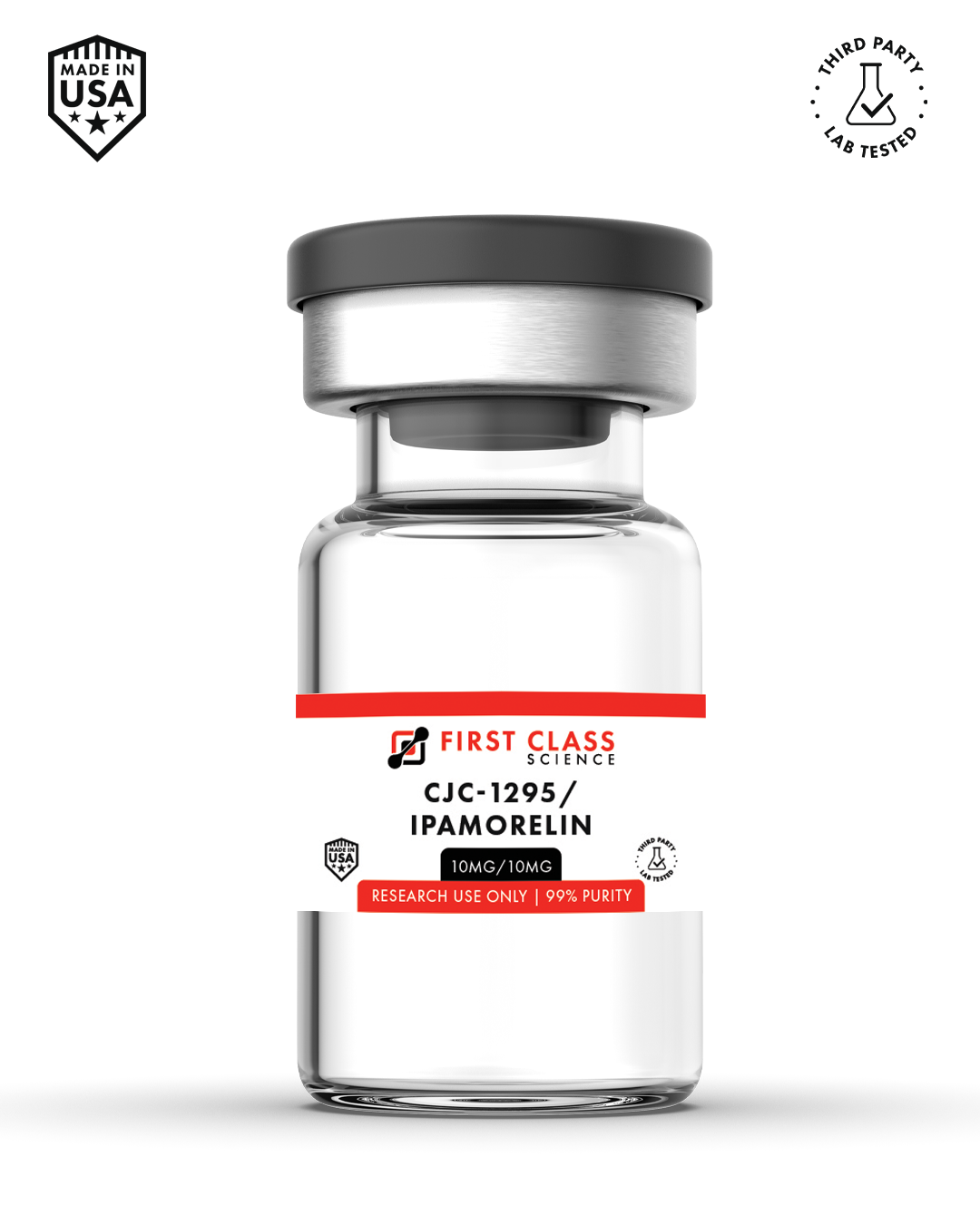
CJC-1295 / Ipamorelin – 10/10mg pairs this GHS-R1a-selective secretagogue with CJC-1295, a GHRH-analog research peptide, for laboratories modeling combined GH-axis receptor engagement; a smaller CJC-1295 / Ipamorelin – 5/5mg vial is also available.
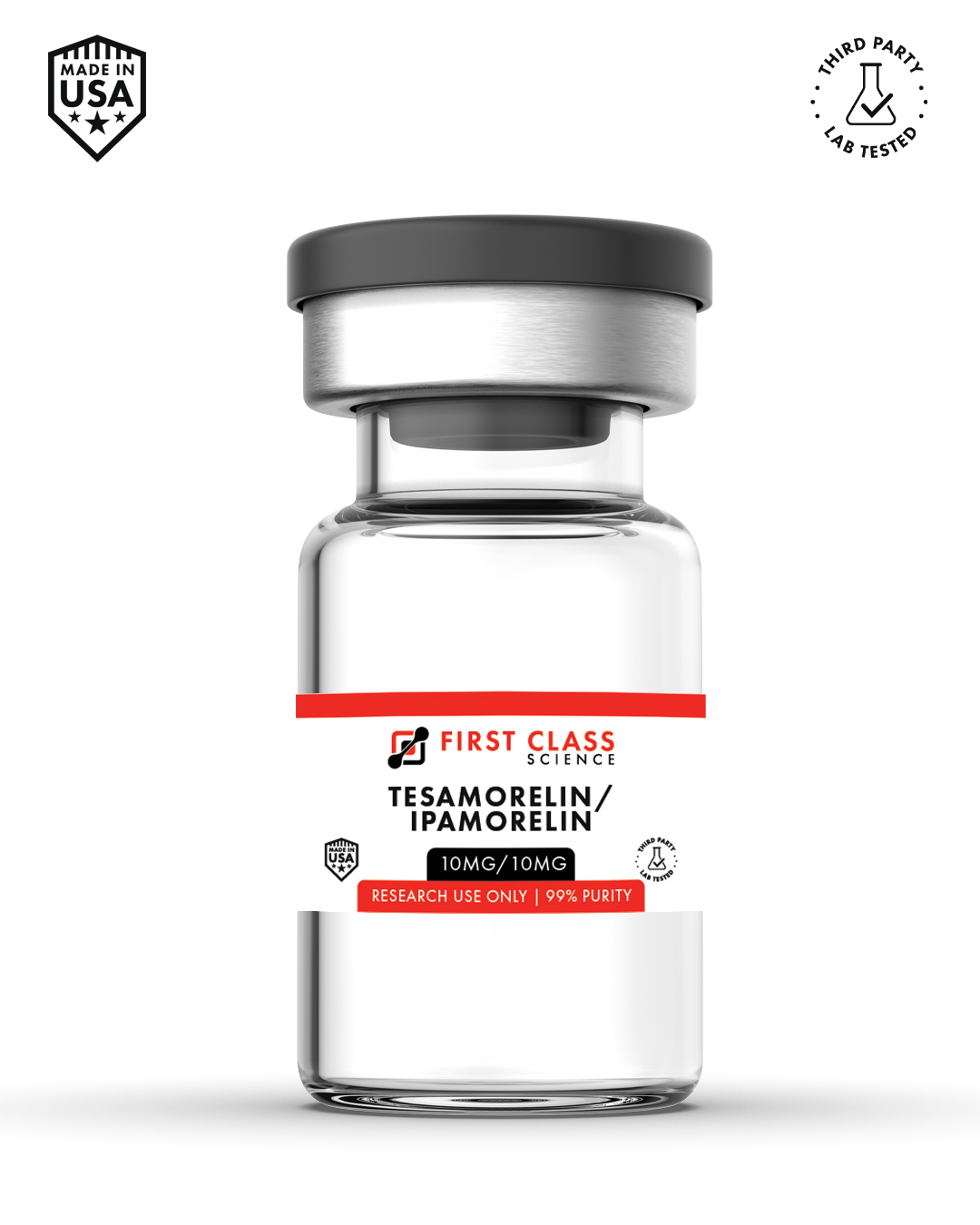
Tesamorelin / Ipamorelin Blend – 10/10mg combines Ipamorelin with Tesamorelin, a separately-studied GHRH-analog research peptide, for protocols examining dual-receptor GH-axis stimulation models; a 5/5mg blend is also stocked.
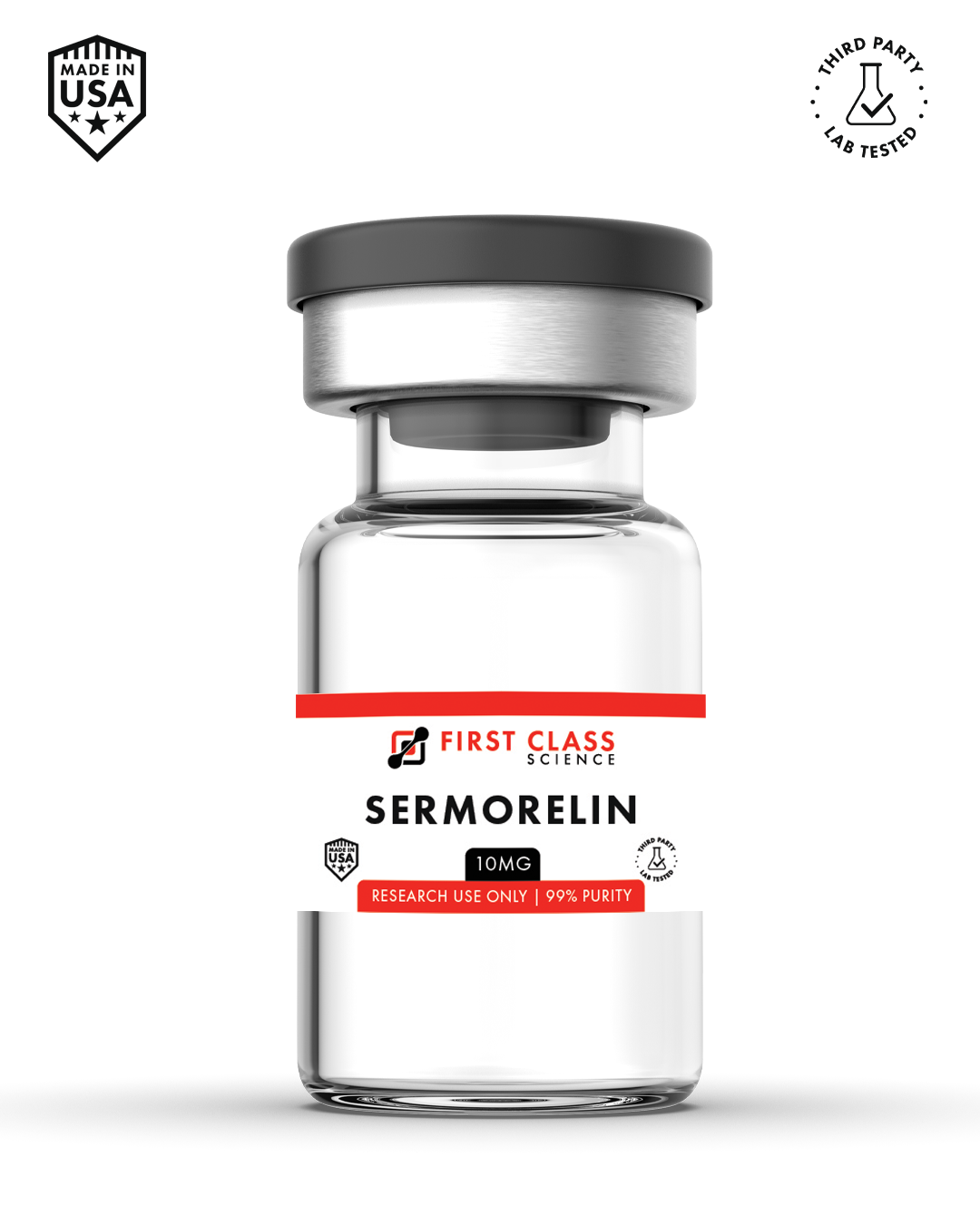
Sermorelin – 10mg is a GHRH(1-29) fragment research peptide studied through a different receptor pathway (the GHRH receptor rather than GHS-R1a), and is commonly ordered alongside Ipamorelin by labs running comparative receptor-pathway studies.
Each of these related preparations carries its own Certificate of Analysis and is subject to the same research-use-only terms described on this page. Laboratories typically choose a single-compound Ipamorelin vial when a protocol calls for isolating GHS-R1a activity specifically, and select a blended vial when the study design calls for modeling combined-receptor GH-axis signaling instead.
Common Research Study Designs
Published studies referenced throughout this page typically fall into one of three designs: controlled rodent pharmacology studies comparing GH, ACTH, cortisol, and prolactin measures across treated and untreated groups; in vitro receptor-binding assays isolating GHS-R1a activation from other secretagogue-receptor activity; and, in the single case discussed above, a controlled multicenter human trial in a specific post-surgical population. Understanding which design underlies a given finding is important context for interpreting the strength of any individual claim in the literature, since a rodent receptor-binding finding and a controlled human trial finding carry very different evidentiary weight.
Frequently Asked Questions
What is the purity of this Ipamorelin research peptide?
Every batch is independently verified via third-party HPLC and mass-spectrometry testing, with a Certificate of Analysis published for each lot.
How should Ipamorelin research peptide be stored?
Store the lyophilized powder at −20°C. After reconstitution, refrigerate at 2–8°C and use within 4–6 weeks; avoid repeated freeze-thaw cycles.
Is Ipamorelin approved for human or animal use?
No. Ipamorelin is not an FDA-approved drug for any indication and has not completed the clinical-trial pathway required for approval. It is sold exclusively for in vitro and laboratory research use.
Has Ipamorelin been tested in humans at all?
Yes, in one narrow context: a phase 2 controlled trial examined intravenous Ipamorelin for postoperative gastrointestinal motility in bowel-resection patients (PMID 25331030). That trial does not establish safety or efficacy for any other use, and does not support human self-administration outside a formal clinical-trial setting.
How does Ipamorelin differ from CJC-1295 or Sermorelin?
Ipamorelin is a selective GHS-R1a (ghrelin-receptor) agonist. CJC-1295, Tesamorelin, and Sermorelin are GHRH-analog research peptides that act through a separate receptor pathway. Researchers frequently study them individually or in fixed-ratio blends to model combined-receptor GH-axis signaling.
What does the Certificate of Analysis show?
The Certificate of Analysis published for each batch shows the HPLC purity result, mass-spectrometry molecular-weight confirmation, lot number, and test date, allowing researchers to independently verify the identity and purity of the specific batch they receive.
Can Ipamorelin research peptide be shipped internationally?
Shipping availability and any import restrictions for research peptides vary by destination country and are subject to change; researchers should confirm their local import regulations for research-use-only compounds before ordering.
Shipping, Handling & Compliance
This Ipamorelin research peptide ships as a lyophilized powder in a sealed glass vial, packaged to maintain cold-chain integrity in transit where applicable. All orders are subject to the research-use-only terms stated on this page, and First Class Science does not sell this or any other research peptide for human or veterinary administration under any circumstance.
Order tracking, batch-specific documentation requests, and general product questions can be directed to First Class Science customer support, which can confirm current lead times and any destination-specific documentation a receiving institution may require for its own compliance records. Researchers who buy Ipamorelin research peptide from First Class Science should confirm their own institution’s import regulations for research-use-only compounds before ordering, as availability and restrictions vary by destination.
Disclaimer: The research summarized above is drawn from third-party published studies conducted in animal, in vitro, or controlled clinical-trial contexts. It is provided for research and educational reference only and does not describe an intended use, effect, or benefit of this product for any person or animal.
⊗ ALL ITEMS ARE SOLD FOR RESEARCH USE ONLY. This category covers strictly in vitro laboratory testing and scientific experimentation. Content on this site is for education only and does not authorize human or animal use of any kind, which is prohibited by law. Only trained, licensed professionals should handle these materials. Nothing sold here qualifies as a drug, food, or cosmetic, and none of it may be labeled, advertised, or used as such.