

Product Usage: For Research Use Only – Not for Human or Veterinary Use
This product is not a drug, food, cosmetic, or dietary supplement and has not been evaluated by the FDA. It is strictly intended for in vitro research by qualified professionals. Any use in humans or animals is strictly prohibited and may violate federal, state, or local laws, including the Federal Food, Drug, and Cosmetic Act. No therapeutic or diagnostic application is implied or permitted. The purchaser assumes all responsibility for compliance with applicable regulations.
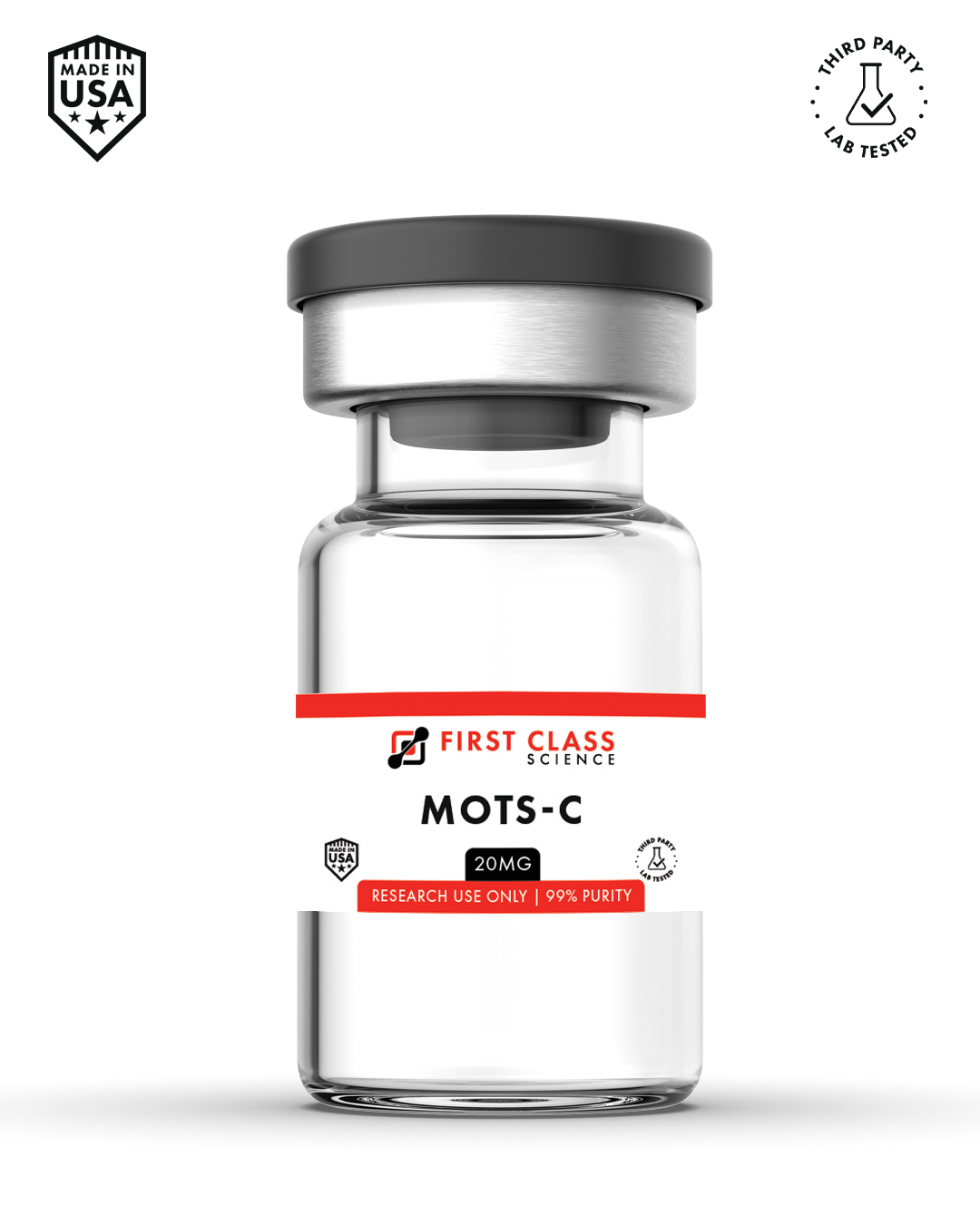
MOTS-C – 20mg
20mg lyophilized vial, for reconstitution per COA instructions. MOTS-C is a mitochondrial-derived research peptide studied for its interaction with AMPK-related metabolic-signaling pathways. Supplied at research-grade purity for laboratory use only.
$250.00
MOTS-c research peptide is a 16-amino-acid, mitochondrial-genome-encoded signaling peptide studied in published preclinical literature for its association with AMPK-dependent metabolic pathways. This mots-c 20mg research peptide vial is supplied by First Class Science as a lyophilized powder for laboratories running larger-batch, multi-replicate in vitro and animal-model protocols where a higher total peptide quantity per vial reduces the number of reconstitution events needed across a study. This page is a research-reference summary for laboratory professionals — it is not a guide to human or animal use.
In this reference:
- What Is MOTS-c Research Peptide?
- Proposed Mechanism of Action
- Chemical Identity
- Purity, Storage & Quality
- Quality Control Methodology
- Who Sources This Research Peptide
- Research Applications
- Exercise-Response & Metabolic-Stress Research Angle
- What the Human Evidence Shows
- Compared to Related Research Compounds
- Common Research Study Designs
- Frequently Asked Questions
What Is MOTS-c Research Peptide?
MOTS-c (“mitochondrial open reading frame of the 12S rRNA-c”) is a 16-amino-acid peptide encoded within the mitochondrial genome itself, rather than nuclear DNA, a discovery that positioned it as one of a small class of characterized “mitochondrial-derived peptides.” The peptide was first isolated and functionally characterized by Lee and colleagues, who published the founding description of its metabolic activity in Cell Metabolism in 2015 (Lee C, et al., “The mitochondrial-derived peptide MOTS-c promotes metabolic homeostasis and reduces obesity and insulin resistance,” Cell Metab. 2015 Mar 3;21(3):443-54; PMID 25738459).
This mots-c 20mg research peptide vial is intended for laboratories that need a larger total quantity of material per unit, commonly for studies spanning multiple concentration arms, extended dose-response curves, or several parallel in vitro replicates drawn from a single reconstituted stock. Because MOTS-c is a comparatively recently characterized peptide relative to older research compounds, the published literature base — while active and growing — remains concentrated in a smaller number of specialized laboratories than more established peptides.
Researchers should understand what the existing MOTS-c literature does, and does not, establish. The bulk of the mechanistic and dose-response data currently in the published record comes from rodent and cultured-cell models. As covered in detail further down this page, human data exist but remain limited relative to the animal literature, and study authors are explicit that several proposed mechanisms are still being refined.
Proposed Mechanism of Action
The most well-characterized proposed mechanism for MOTS-c centers on the folate-AICAR-AMPK signaling axis. Published research, including a 2023 review in the Journal of Translational Medicine, describes MOTS-c as acting to inhibit the folate cycle and its associated de novo purine-biosynthesis pathway in tested cell and animal models (Wan W, et al., “Mitochondria-derived peptide MOTS-c: effects and mechanisms related to stress, metabolism and aging,” J Transl Med. 2023;21:36; PMID 36670507; PMC9854231). Study authors report that this inhibition leads to accumulation of AICAR, an AMP-mimetic molecule that in turn activates AMPK without depleting cellular energy stores, a mechanism the review authors describe as allowing “AMPK engagement without cellular energy depletion” in the models tested.
A separate and mechanistically distinct line of published research has examined MOTS-c’s behavior under acute metabolic-stress conditions in cultured cells, reporting that the peptide translocates to the nucleus and is associated with regulation of stress-response gene-expression programs — a finding first reported by Kim and colleagues and further explored in follow-on cell-model studies. Authors of this nuclear-translocation research note that the pathway appears to require baseline AMPK activity, suggesting a feedback relationship between the two proposed mechanisms rather than two fully independent pathways.
More recent published work has also proposed a tissue-specific mechanism in skeletal-muscle cell models, reporting that MOTS-c may interact directly with casein kinase 2 alpha (CK2α) as a binding partner in that tissue context (iScience, 2024). This remains one additional proposed pathway under active investigation rather than a settled mechanism, and researchers should treat it, like the pathways above, as a specific published finding rather than an established pharmacological fact for the peptide as a whole.
No single mechanism has been confirmed as the sole explanation for MOTS-c’s reported activity across all tested models, and study authors consistently frame these findings as candidate pathways supported by specific experimental designs, not universal claims. Every mechanistic statement on this page should be read as a summary of a specific published study’s findings in the model system that study used.
Chemical Identity
| Peptide Name | MOTS-c (Mitochondrial Open Reading Frame of the 12S rRNA-c) |
| Sequence | Met-Arg-Trp-Gln-Glu-Met-Gly-Tyr-Ile-Phe-Tyr-Pro-Arg-Lys-Leu-Arg (MRWQEMGYIFYPRKLR) |
| Sequence Length | 16 amino acids |
| Molecular Formula | C101H152N28O22S2 |
| Molecular Weight | ~2174.7 g/mol |
| Appearance | White to off-white lyophilized powder |
| Vial Quantity (this listing) | 20mg per vial |
Given documented variability in CAS-number registrations reported for this comparatively recently characterized peptide across different suppliers, First Class Science does not publish a CAS number for this product. Researchers are encouraged to confirm identity against the batch Certificate of Analysis and independent mass-spectrometry data provided with each order rather than relying on a supplier-quoted CAS number alone.
Purity, Storage & Quality
First Class Science supplies this mots-c 20mg research peptide vial at 99% purity, independently verified by third-party HPLC testing and mass spectrometry. A Certificate of Analysis is published for every batch at our Certificate of Analysis page, listing the specific lot’s purity result, molecular-weight confirmation, and test date.
Store the lyophilized powder at −20°C for long-term stability. After reconstitution with bacteriostatic or sterile water, refrigerate at 2–8°C and use within 4–6 weeks. Avoid repeated freeze-thaw cycles and prolonged exposure to light or room-temperature conditions, both associated with accelerated peptide degradation in general handling literature. Because this is a 20mg vial, laboratories running multiple concentration arms from a single reconstituted stock should record their dilution series carefully in protocol documentation to avoid concentration drift across aliquots drawn over the vial’s use window.
Important: This item is manufactured strictly for research purposes. It is not intended for human or veterinary use and is distributed solely for laboratory and scientific investigation.
Quality Control Methodology
Each production batch of this mots-c 20mg research peptide undergoes independent third-party testing before release. High-performance liquid chromatography (HPLC) confirms purity by measuring the proportion of target peptide relative to synthesis by-products or degradation fragments present in the sample. Mass spectrometry separately confirms molecular identity, verifying that the measured mass of the material matches the expected ~2174.7 g/mol molecular weight of MOTS-c. Both results are recorded on the batch’s published Certificate of Analysis, letting researchers independently verify the identity and purity of the specific lot used in their protocols rather than relying on manufacturer claims alone.
For larger-batch vials like this 20mg format, some laboratories additionally spot-check reconstituted-stock concentration against the labeled peptide mass as an internal quality step before beginning a multi-arm study, particularly where several sequential dilutions will be drawn from the same stock over multiple experimental sessions.
Who Sources This Research Peptide
Buyers of this mots-c 20mg research peptide are primarily university and academic research laboratories, contract research organizations (CROs), and biotechnology R&D teams running in vitro and animal-model studies on mitochondrial-signaling and metabolic pathways. The 20mg format is more frequently requested by laboratories running larger dose-response matrices, longer study timelines, or several parallel replicate arms, where ordering a single higher-quantity vial reduces the number of separate reconstitution events and associated batch-to-batch handling variability compared with ordering multiple smaller vials.
First Class Science requires that all research-peptide orders be placed by parties who acknowledge and agree to the research-use-only terms stated on this page prior to purchase. Institutional buyers frequently request the Certificate of Analysis for a specific lot in advance of purchase for their own internal quality-assurance records, which First Class Science makes available on request in addition to the standing copy published for each batch.
Research Applications
The published literature on MOTS-c spans several distinct research areas. Each is summarized below strictly as a description of what has been studied in animal and in vitro models — not as a claim about effects in humans.
Metabolic Homeostasis & AMPK-Pathway Research
The founding 2015 study by Lee and colleagues reported that MOTS-c administration in mice fed a high-fat diet was associated with improved insulin-sensitivity measures and resistance to diet-induced obesity in that specific rodent model, with study authors attributing these findings to AMPK-pathway activation via the folate-AICAR mechanism described above. Follow-on preclinical studies have extended this line of research to additional rodent metabolic-stress paradigms.
Mitochondrial-Genome-Derived Peptide Research
Because MOTS-c is one of only a handful of characterized mitochondrial-derived peptides, it is also studied as a model compound for understanding how the mitochondrial genome may encode regulatory signals beyond canonical oxidative-phosphorylation and energy-production functions — an active and comparatively young area of published research relative to nuclear-encoded signaling peptides.
Nuclear Gene-Expression & Cellular Stress-Response Research
Cell-model research has examined MOTS-c’s reported nuclear translocation under acute metabolic-stress conditions and its association with regulation of stress-response gene-expression programs in those cultured cells. This research area is mechanistically linked to the AMPK-pathway findings above, with authors proposing that the two processes may operate as a feedback loop rather than as independent pathways.
Cellular Energy Metabolism Research
A broader body of in vitro work has examined MOTS-c’s association with measures of cellular energy metabolism and mitochondrial function at the cell-culture level, distinct from and complementary to the whole-animal metabolic-homeostasis findings summarized above. This category of research is specifically framed around cellular bioenergetics and signaling measures in tested models, not body-composition outcomes.
Exercise-Response & Metabolic-Stress Research Angle
A distinct and more recent line of published research has examined MOTS-c in the specific context of skeletal-muscle physiology and acute exercise-response signaling. Endogenous MOTS-c expression has been reported to rise substantially in skeletal-muscle tissue during acute physical exertion in tested human subjects, an observation that has driven interest in MOTS-c as a candidate “exercise-response” signaling peptide within the mitochondrial-derived-peptide research field.
Separately, a 2024 study published in iScience proposed casein kinase 2 alpha (CK2α) as a direct binding partner for MOTS-c specifically within skeletal-muscle cell models, examining downstream effects on measures of muscle glucose uptake and atrophy resistance in the animal models tested. This is a proposed, tissue-specific mechanism under active investigation, and researchers should treat it as one additional candidate pathway alongside the AMPK and nuclear-translocation mechanisms described above, not as a confirmed or exclusive mode of action. This research area is studied strictly as cellular and mitochondrial energy-metabolism signaling in tested models — it does not describe or support any consumer body-composition outcome, and this page makes no such claim.
What the Human Evidence Shows
Researchers evaluating this mots-c 20mg research peptide should be aware of the meaningful gap between the animal and cell-culture literature summarized above and the current human evidence base. The founding 2015 Lee et al. study was conducted entirely in mouse models; the 2023 Journal of Translational Medicine review by Wan and colleagues likewise characterizes the bulk of the published mechanistic and metabolic-homeostasis literature as animal- and cell-model based, noting that human data that do exist are largely observational (for example, correlational measurements of circulating MOTS-c levels in specific human cohorts) rather than derived from controlled interventional trials.
A registered Phase 2a interventional trial (ClinicalTrials.gov identifier NCT07505745) examining MOTS-c administration in adults with prediabetes and overweight/obesity is listed in the public clinical-trials registry as of this writing. First Class Science is not affiliated with this or any other clinical trial, has not independently verified its results, and makes no claim about outcomes; we reference its existence here only to give researchers an accurate, current picture of where controlled human investigation of this peptide currently stands — largely at an early, registry-stage rather than a completed, peer-reviewed-outcome stage.
We include this section because researchers deserve an accurate picture of the evidence base, not just the parts that sound most compelling. The animal and cell-culture literature on MOTS-c’s proposed AMPK and nuclear-signaling mechanisms is real, growing, and increasingly mechanistically detailed. The comparative scarcity of completed, peer-reviewed, controlled human trial data is equally real and belongs in the same conversation. A researcher citing MOTS-c’s metabolic or exercise-response literature in a grant application, protocol design, or comparative study should characterize those findings accurately as preclinical or early-stage findings rather than implying an established human effect the published record does not yet support.
Compared to Related Research Compounds
MOTS-c is frequently studied alongside other compounds relevant to mitochondrial-signaling and AMPK-pathway research. First Class Science supplies several related preparations for researchers running comparative studies:
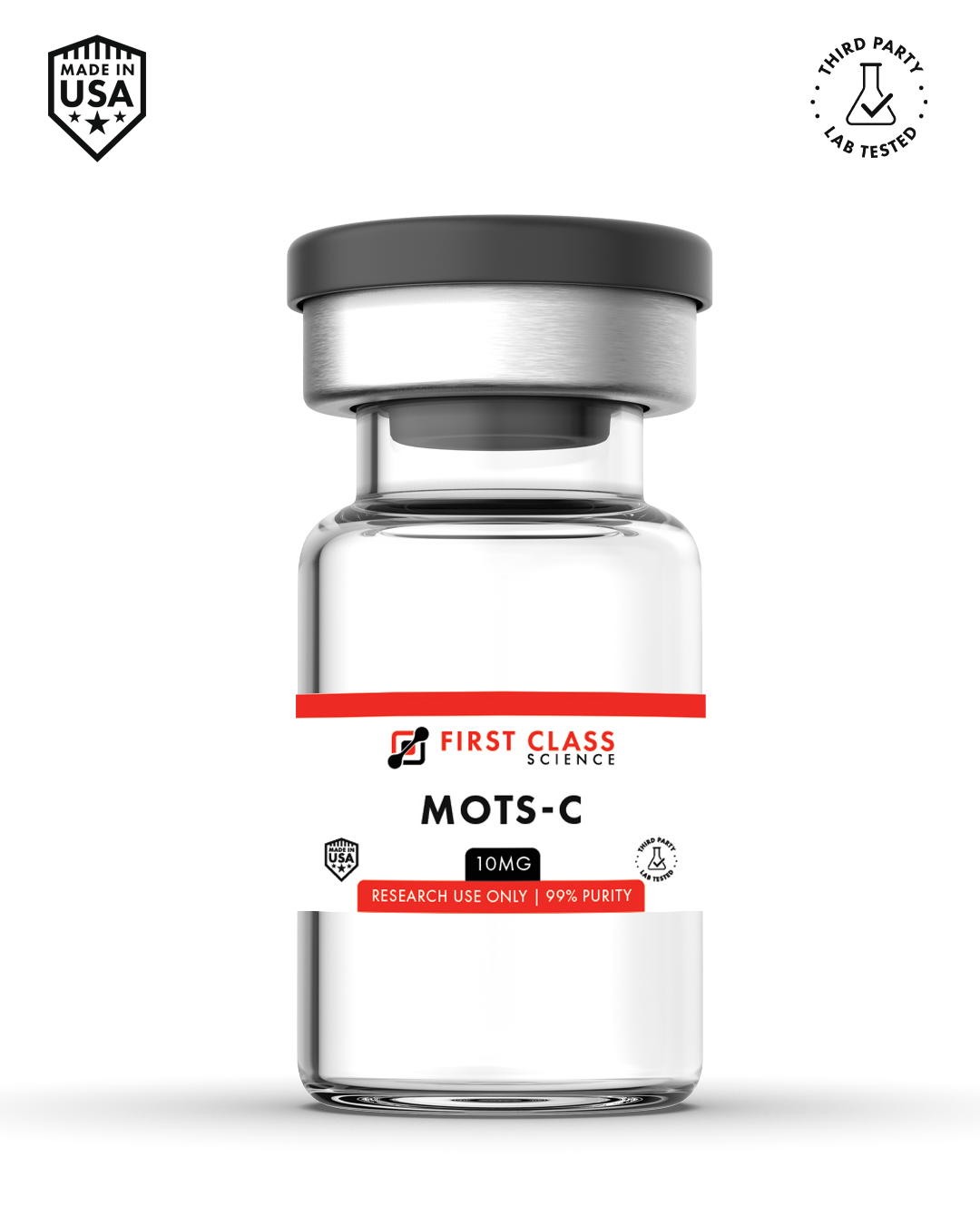
MOTS-C – 10mg supplies the identical peptide in a smaller per-vial quantity, for laboratories running single-arm pilot studies, exploratory replicates, or protocols that do not require the larger multi-arm quantity of the 20mg format described on this page. See the FAQ below for guidance on choosing between the two.
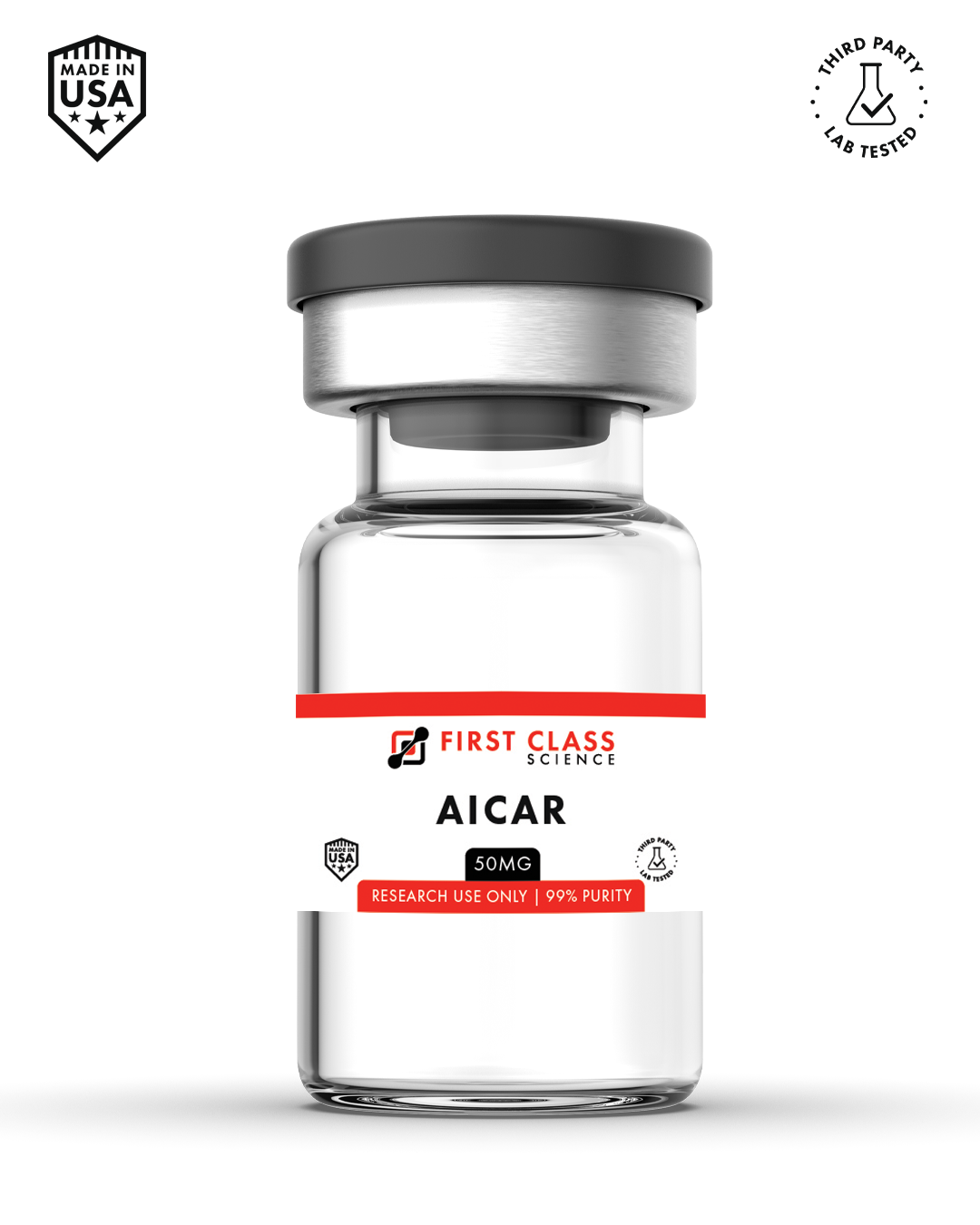
AICAR – 50mg is directly mechanistically relevant to MOTS-c research: AICAR is the same AMP-mimetic AMPK-activating metabolite that study authors report accumulates downstream of MOTS-c’s proposed folate-cycle-inhibition mechanism, making it a frequently co-studied compound in AMPK-pathway comparative protocols.
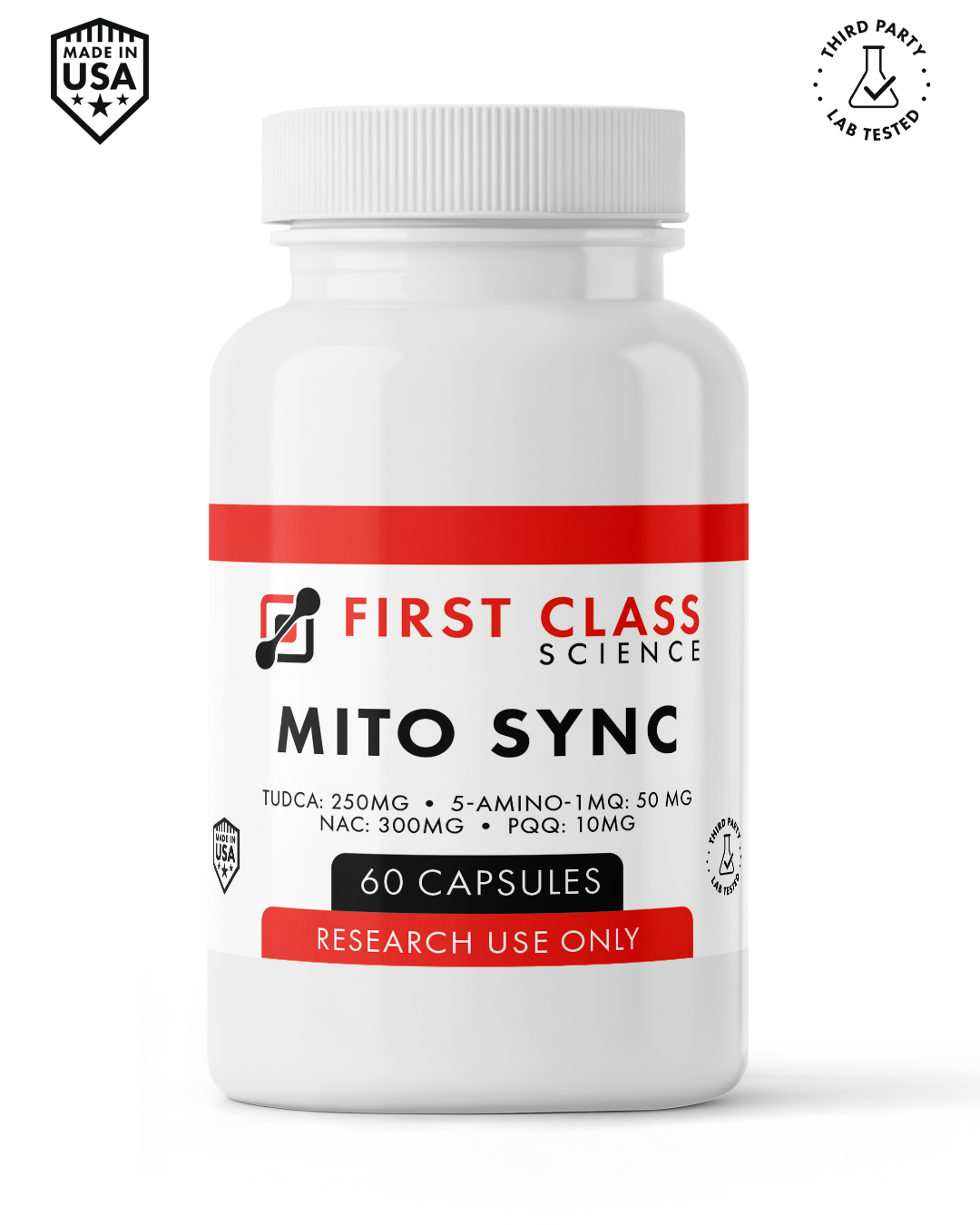
Mito Sync Capsules is First Class Science’s mitochondrial-support research blend in an oral-research capsule format, supplied for laboratories whose protocols call for a multi-ingredient mitochondrial-pathway research formulation rather than a single-compound lyophilized vial.
Each of these related preparations carries its own Certificate of Analysis and is subject to the same research-use-only terms described on this page. Laboratories choosing between the 10mg and 20mg MOTS-c vials, the single-target AICAR vial, and the multi-ingredient Mito Sync capsule format typically base that decision on their specific study design and how many total milligrams, replicates, or research arms the protocol requires.
Common Research Study Designs
Published MOTS-c studies referenced throughout this page typically fall into one of several designs: controlled rodent metabolic-model studies comparing treated and untreated groups on defined insulin-sensitivity or body-weight-regulation outcome measures under high-fat-diet conditions; in vitro cell-culture assays examining a specific signaling pathway (AMPK activation, nuclear translocation, or CK2α binding) in isolation; and, less commonly, small observational human cohort measurements of circulating MOTS-c levels or early-phase registered interventional trials not yet reporting completed peer-reviewed outcomes. Understanding which design underlies a given finding is important context for interpreting the strength of any individual claim, since a rodent-model finding and a completed controlled human trial finding carry very different evidentiary weight.
Frequently Asked Questions
What is the purity of this mots-c 20mg research peptide?
Every batch is independently verified at 99% purity via third-party HPLC and mass-spectrometry testing, with a Certificate of Analysis published for each lot.
How does the 20mg vial differ from the 10mg vial?
Both vials contain the identical MOTS-c peptide at the same 99% verified purity — the only difference is total peptide quantity per vial. The 20mg format is generally selected by laboratories running larger dose-response matrices, longer study timelines, or several parallel replicate arms from a single reconstituted stock, while the 10mg format suits smaller single-arm pilot protocols. Neither format implies a different peptide, concentration standard, or research application.
How should this research peptide be stored?
Store the lyophilized powder at −20°C. After reconstitution, refrigerate at 2–8°C and use within 4–6 weeks; avoid repeated freeze-thaw cycles.
Is MOTS-c approved for human or animal use?
No. MOTS-c is not an FDA-approved drug and has not completed controlled human clinical trials establishing safety or efficacy for any condition. It is sold exclusively for in vitro and non-clinical laboratory research.
What does the published research on MOTS-c actually cover?
The published literature covers proposed AMPK-pathway and nuclear-signaling mechanisms in animal and cell-culture models, summarized in the Research Applications and Human Evidence sections above. As detailed there, controlled human trial data remain limited relative to the animal literature.
Can this research peptide be shipped internationally?
Shipping availability and any import restrictions for research peptides vary by destination country and are subject to change; researchers should confirm local import regulations for research-use-only compounds before ordering.
Shipping, Handling & Compliance
This mots-c 20mg research peptide ships as a lyophilized powder in a sealed glass vial, packaged to maintain cold-chain integrity in transit where applicable. All orders are subject to the research-use-only terms stated on this page, and First Class Science does not sell this or any other research peptide for human or veterinary administration under any circumstance. Order tracking, batch-specific documentation requests, and general product questions can be directed to First Class Science customer support, which can confirm current lead times and any destination-specific documentation a receiving institution may require for its own compliance records.
Disclaimer: The research summarized above is drawn from third-party published studies conducted in animal, in vitro, or clinical research contexts. It is provided for research and educational reference only and does not describe an intended use, effect, or benefit of this product for any person or animal.
⊗ ALL ITEMS ARE SOLD FOR RESEARCH USE ONLY. This category covers strictly in vitro laboratory testing and scientific experimentation. Content on this site is for education only and does not authorize human or animal use of any kind, which is prohibited by law. Only trained, licensed professionals should handle these materials. Nothing sold here qualifies as a drug, food, or cosmetic, and none of it may be labeled, advertised, or used as such.