

Product Usage: For Research Use Only – Not for Human or Veterinary Use
This product is not a drug, food, cosmetic, or dietary supplement and has not been evaluated by the FDA. It is strictly intended for in vitro research by qualified professionals. Any use in humans or animals is strictly prohibited and may violate federal, state, or local laws, including the Federal Food, Drug, and Cosmetic Act. No therapeutic or diagnostic application is implied or permitted. The purchaser assumes all responsibility for compliance with applicable regulations.
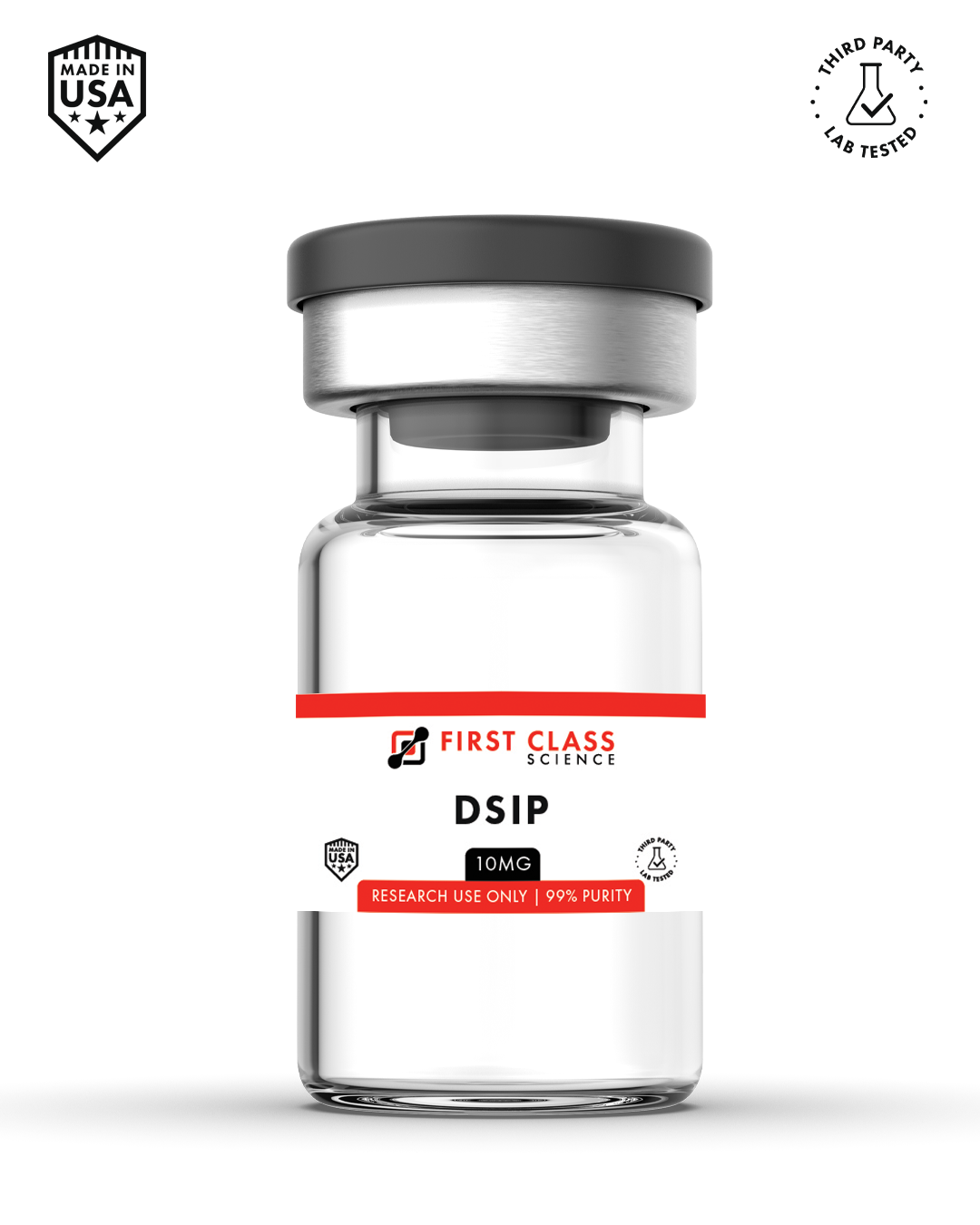
DSIP – 10mg
10mg lyophilized vial. DSIP (Delta Sleep-Inducing Peptide) is a neuropeptide studied in laboratory research on sleep-related and stress-axis signaling pathways. Supplied at research-grade purity for laboratory use only.
$150.00
Researchers evaluating whether to buy DSIP research peptide for laboratory work are dealing with one of the oldest, and most debated, compounds in the neuropeptide literature. Delta Sleep-Inducing Peptide (DSIP) was first isolated from cerebral venous blood during 1970s electrical-stimulation studies of the thalamus, and it has been cited for decades in sleep-regulation and stress-signaling research — even though its precise receptor and mechanism remain unresolved almost fifty years later. This page is a research-reference summary for laboratory professionals who buy DSIP research peptide for in vitro or animal-model investigation; it is not a guide to human or animal use.
In this reference:
- What Is DSIP?
- Proposed Mechanism of Action
- Chemical Identity
- Purity, Storage & Quality
- Research Applications
- What the Human Evidence Shows
- Compared to Related Research Compounds
- Frequently Asked Questions
What Is DSIP?
DSIP is a nonapeptide with the sequence Trp-Ala-Gly-Gly-Asp-Ala-Ser-Gly-Glu, first described by the Schoenenberger-Monnier research group in Basel after isolating it from the cerebral venous blood of rabbits following low-frequency (“hypnogenic”) electrical stimulation of the intralaminar thalamic nuclei. By the mid-1980s enough literature had accumulated on the peptide that a dedicated update review was published summarizing the field (Graf & Kastin, Peptides, 1986 — PMID 3550726).
Researchers have since reported DSIP in both free and protein-bound forms across the hypothalamus, limbic system, pituitary, and several peripheral tissues and body fluids, a distribution pattern that has fueled decades of speculation about its broader neuroendocrine role beyond sleep alone. Laboratories that buy DSIP research peptide today generally do so to model one of these signaling questions specifically, rather than to pursue DSIP as a single well-characterized pathway — the compound’s own reviewers describe it as multifunctional but incompletely understood.
The peptide’s name itself has become a point of caution among later reviewers. “Delta Sleep-Inducing Peptide” reflects the specific slow-wave-sleep finding that led to its isolation, but subsequent researchers have noted that the name may overstate how consistently that effect has been reproduced across laboratories and species. Some published commentary has gone as far as proposing that the biological activity historically attributed to DSIP may partly reflect a related, not-yet-fully-characterized endogenous peptide rather than DSIP in its exact synthesized form — a distinction researchers designing new studies should keep in mind when interpreting older findings attributed to “DSIP” in the literature.
Proposed Mechanism of Action
No DSIP-specific receptor, gene, or binding protein has ever been isolated and confirmed, a gap that a 2006 Journal of Neurochemistry review bluntly titled “a still unresolved riddle.” Its authors concluded that the sleep-factor hypothesis behind DSIP is “extremely poorly documented and still weak,” and proposed that a related but distinct “DSIP-like” endogenous peptide — not necessarily DSIP itself — may account for the biological activity attributed to it in older studies (Kovalzon & Strekalova, J Neurochem, 2006 — PMID 16539679).
Earlier literature had proposed that DSIP’s activity involves modulation of adrenergic transmission and interaction with the hypothalamic-pituitary-adrenal (HPA) axis, including reported effects on ACTH and cortisol secretion in tested animal models. The 1986 Peptides update reviewed above states plainly that “a possible mechanism of action involving the modulation of adrenergic transmission remain[s] to be established” — language that still describes the state of the field. Researchers citing DSIP mechanism claims should treat every proposed pathway on this page as exactly that: a proposed, unconfirmed explanation from a specific published study, not settled pharmacology.
A newer line of preclinical work has examined DSIP in a rodent middle-cerebral-artery-occlusion (MCAO) stroke model, reporting that eight days of intranasal DSIP administration was associated with accelerated recovery of motor performance on rotarod testing relative to vehicle-treated controls (Tukhovskaya et al., Molecules, 2021 — PMC8434407). The authors frame this as evidence of a broader neuroprotective research profile beyond sleep alone, though — as with the rest of this section — the finding is specific to a rodent injury model and has not been established in controlled human studies.
Chemical Identity
| CAS Number | 62568-57-4 |
| Molecular Formula | C35H48N10O15 |
| Molecular Weight | 848.8 g/mol |
| Sequence | Trp-Ala-Gly-Gly-Asp-Ala-Ser-Gly-Glu (nonapeptide) |
| Appearance | White to off-white lyophilized powder |
Purity, Storage & Quality
First Class Science supplies this DSIP research peptide vial at 99% purity, independently verified by third-party HPLC testing and mass spectrometry. A Certificate of Analysis is available for every batch at our Certificate of Analysis page, listing the specific lot’s purity result, molecular-weight confirmation, and test date. Laboratories that buy DSIP research peptide from First Class Science can request a batch-specific COA before or after purchase for their own quality-assurance records.
Store the lyophilized compound at −20°C for long-term stability. After reconstitution with bacteriostatic or sterile water, refrigerate at 2–8°C and use within 4–6 weeks. Avoid repeated freeze-thaw cycles and prolonged exposure to light or room-temperature conditions, both associated with accelerated peptide degradation in handling literature.
Important: This item is manufactured strictly for research purposes. It is not intended for human or veterinary use and is distributed solely for laboratory and scientific investigation.
Quality Control Methodology
Each production batch of this DSIP research peptide undergoes independent third-party testing before release. High-performance liquid chromatography (HPLC) confirms purity by measuring the proportion of target peptide relative to synthesis by-products or degradation fragments in the sample. Mass spectrometry separately confirms molecular identity, verifying that the measured mass matches the expected 848.8 g/mol molecular weight of DSIP. Both results are recorded on the batch’s published Certificate of Analysis, allowing researchers to independently verify the identity and purity of the material used in their protocols rather than relying on manufacturer claims alone.
Preparing Solutions for Laboratory Use
Laboratories reconstituting lyophilized DSIP for in vitro or animal-model protocols typically follow standard peptide-handling practice: the vial is brought to room temperature before opening, and a diluent — commonly reconstitution solution or sterile water for injection (SWFI) — is added slowly down the interior wall of the vial rather than directly onto the lyophilized material, to reduce foaming and mechanical stress on the peptide. The vial is then gently swirled, never shaken, until the powder is fully dissolved.
Stock-solution concentration for a given protocol is calculated by dividing the total peptide mass in the vial by the volume of diluent added. A laboratory targeting a specific microgram- or milligram-per-milliliter stock concentration for an assay or an intranasal-administration rodent protocol, such as the dosing regimen described in the 2021 Molecules stroke-recovery study referenced above, would select a diluent volume accordingly and record that calculation in its own protocol documentation. This page describes general laboratory reconstitution practice for research use only and is not a dosing guide for human or animal administration.
Who Sources This Research Peptide
Buyers who buy DSIP research peptide from First Class Science are typically university and academic research laboratories, contract research organizations (CROs), and biotechnology R&D teams running in vitro and animal-model studies on sleep-architecture and neuroendocrine-signaling pathways. First Class Science requires that all research-peptide orders be placed by parties who acknowledge and agree to the research-use-only terms stated on this page prior to purchase.
Research Applications
The published literature on DSIP spans a handful of distinct research areas, and the relative depth of each area differs considerably — the sleep-architecture and HPA-axis literature is decades old and has not been substantially expanded in recent years, while the neuroprotection angle discussed below is comparatively new and based on a single published model. Each area is summarized below strictly as a description of what has been studied in animal and in vitro models — not as a claim about effects in humans.
Sleep-Architecture & EEG Delta-Wave Research
The original 1970s-80s literature reported that administration of DSIP was associated with increased slow-wave (delta) sleep activity and altered EEG patterns in tested animal models, the finding that gave the peptide its name. Researchers use this body of work as a reference point for studying sleep-architecture regulation in animal models generally, though the DSIP-specific findings have not been robustly replicated with modern methodology and remain considered preliminary by later reviewers.
Stress & HPA-Axis Signaling Research
Published research has examined DSIP’s relationship to ACTH and cortisol regulation in tested animal models, with study authors reporting modulatory effects on stress-hormone secretion patterns following administration. Researchers use these findings to study neuropeptide involvement in hypothalamic-pituitary-adrenal axis signaling pathways, an area connected to the broader endocrine-distribution pattern described in the “What Is DSIP” section above.
Neuroprotection & Post-Injury Recovery Research
A more recent 2021 study examined intranasal DSIP administration in a rodent MCAO stroke model, reporting accelerated motor-function recovery on rotarod testing in DSIP-treated animals relative to controls. This preclinical finding has broadened research interest in DSIP beyond its original sleep-related framing into general central-nervous-system injury-recovery research, though this remains a single reported model and independent replication has not yet been published.
What the Human Evidence Shows
Researchers evaluating DSIP should understand that its human evidence base is old, thin, and mixed relative to the animal literature summarized above. A representative example is a 1992 double-blind, placebo-controlled study in which 16 chronic-insomnia patients received intravenous synthetic DSIP or placebo across three laboratory nights (Bes et al., Neuropsychobiology, 1992 — PMID 1299794). The DSIP group showed statistically higher sleep efficiency and shorter sleep latency than placebo, but the study authors themselves described these effects as “weak,” and subjective sleep quality did not improve.
No modern, adequately powered, or FDA-reviewed controlled human trial of DSIP exists in the published record, and the 2006 Journal of Neurochemistry review cited above concluded that the entire sleep-factor hypothesis underlying DSIP remains poorly documented at the mechanistic level. We include this section because researchers deserve an accurate picture of the evidence base rather than only the parts that sound compelling: the animal and in vitro literature on DSIP is real but limited, and the human data is older, smaller in scale, and weaker than marketing framing around this peptide sometimes suggests.
This distinction matters for how DSIP findings should be characterized in grant applications, protocol design, or comparative literature reviews. A researcher citing the 1992 human study above should characterize it as a small, dated, statistically weak pharmacology trial — not evidence of an established sleep-therapy effect — noting that no comparable follow-up trial appears to have been published since. DSIP is not an FDA-approved drug, has not completed modern controlled human clinical trials, and is not evaluated by the FDA for safety or efficacy in humans or animals for any condition.
This product is not intended to diagnose, treat, cure, or prevent any disease or condition, including any human sleep disorder, and nothing on this page should be read as guidance for human or animal administration.
Compared to Related Research Compounds
DSIP is frequently studied alongside other Russian- and European-origin neuropeptides examined for central-nervous-system signaling research. First Class Science supplies several related preparations for researchers running comparative studies:
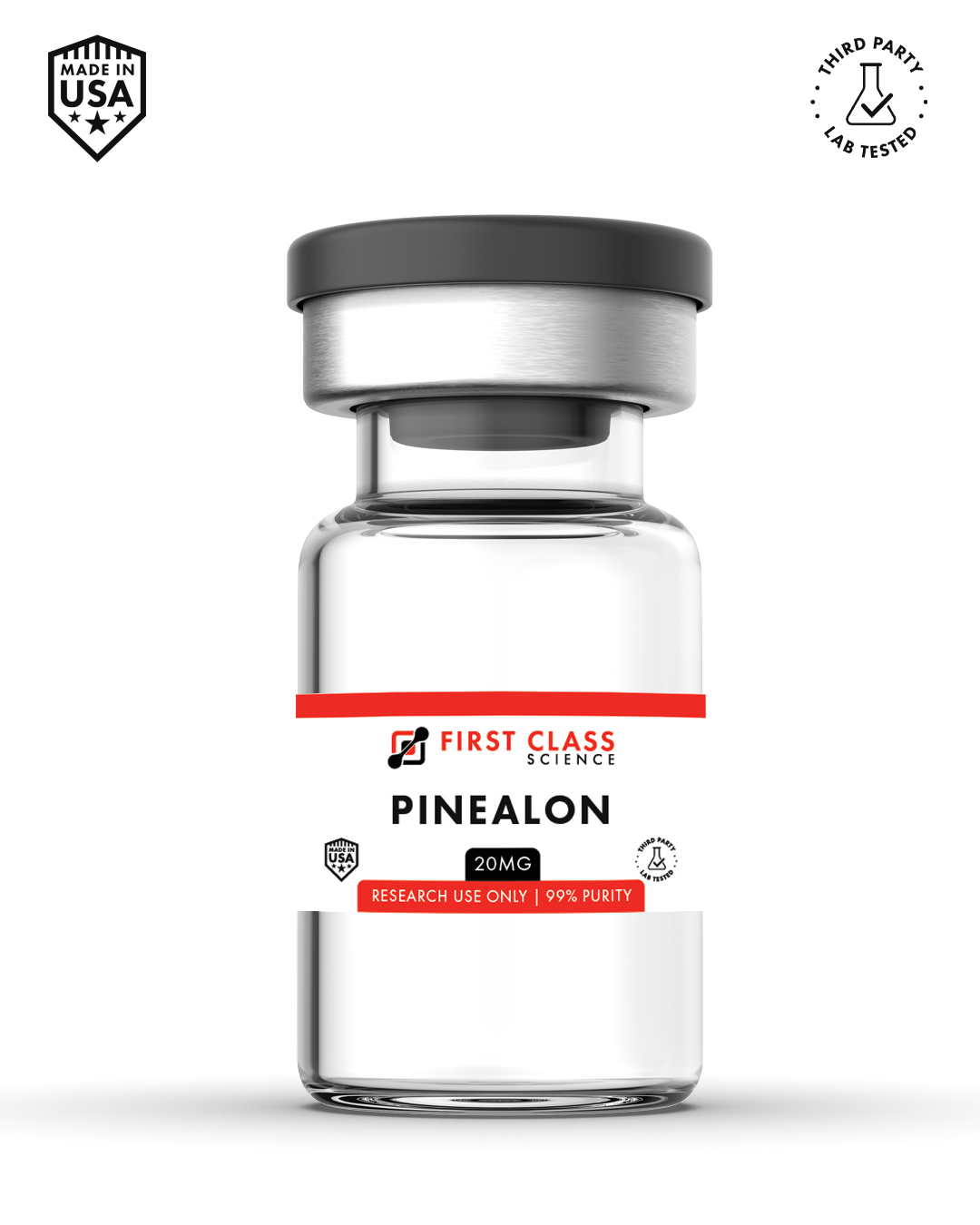
Pinealon – 20mg is a synthetic tripeptide (Glu-Asp-Arg) studied for cellular-signaling and neuroprotective-research applications within central-nervous-system models, distinct from DSIP’s sleep-and-stress-axis focus but overlapping in general CNS-signaling research interest.
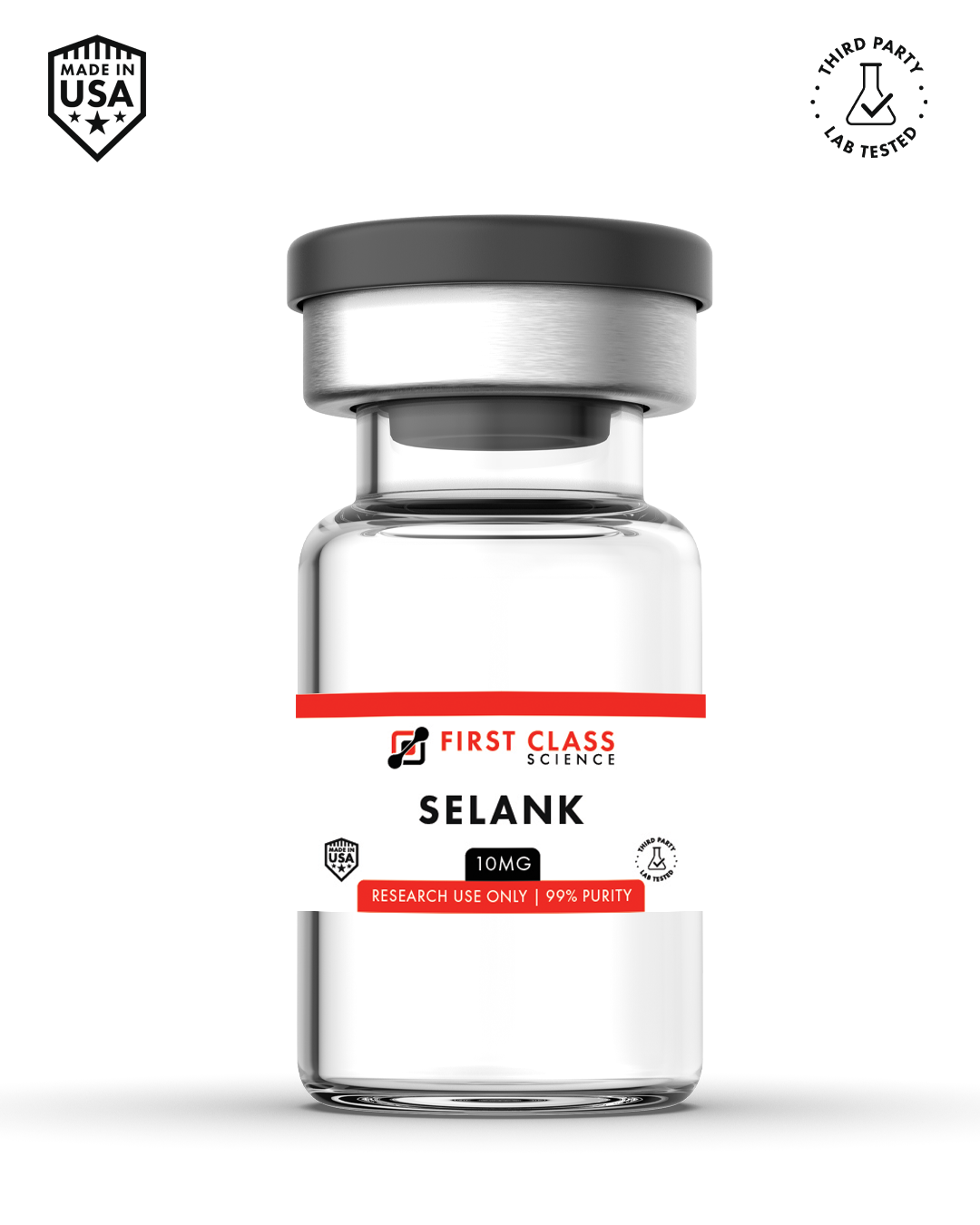
Selank – 10mg is a synthetic heptapeptide derived from tuftsin, studied for anxiolytic-like activity and hippocampal BDNF-expression effects in animal and clinical study models — a useful comparator for labs examining stress-related neuropeptide signaling alongside DSIP’s HPA-axis research.
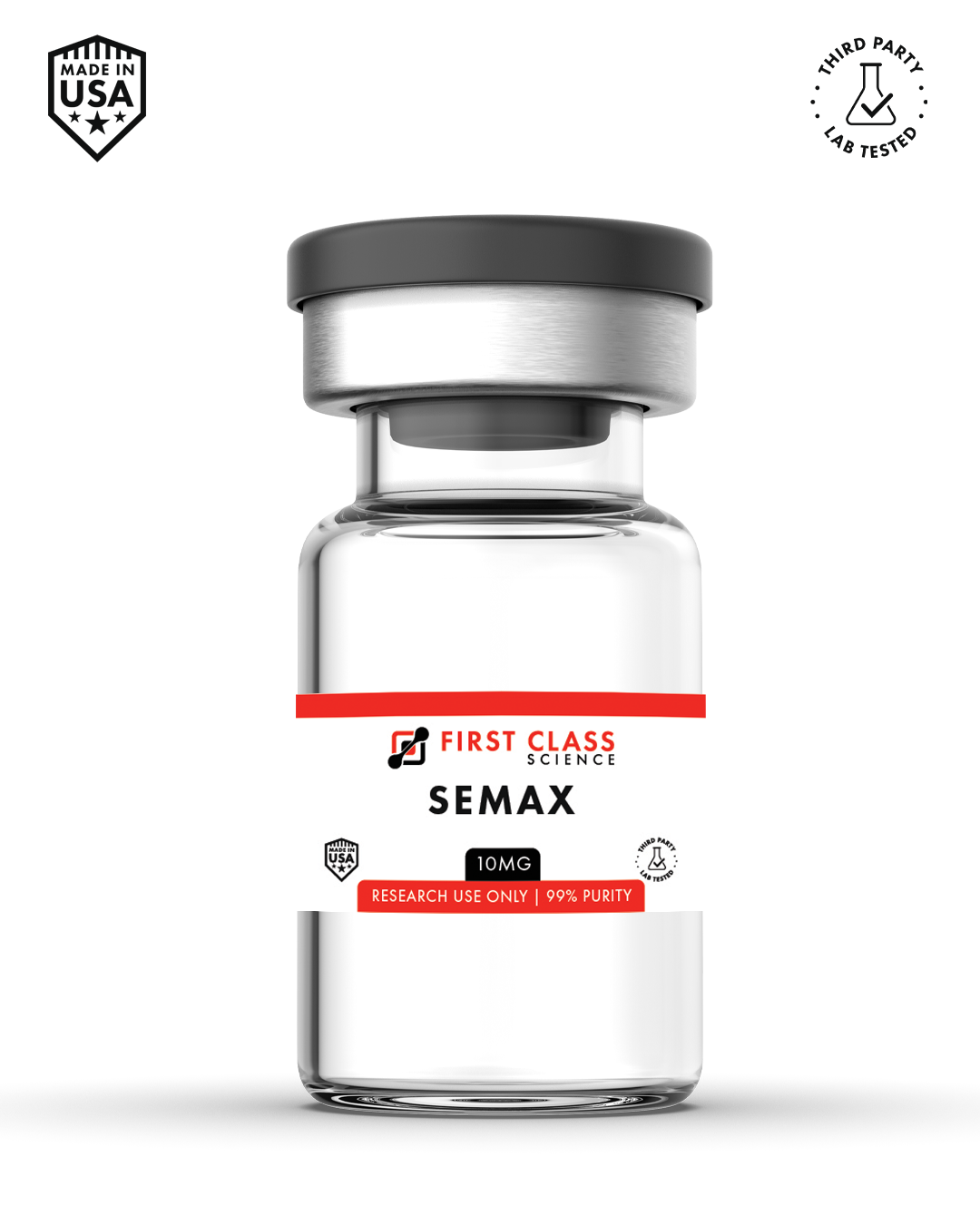
Semax – 10mg is a synthetic ACTH(4-10) analog studied for neurotrophic-factor expression and cognitive-performance measures in animal and Russian clinical study models, offering a second HPA-axis-adjacent comparator for laboratories designing multi-peptide CNS protocols.
Each of these related preparations carries its own Certificate of Analysis and is subject to the same research-use-only terms described on this page. Laboratories choosing between DSIP and these related compounds typically base that decision on the specific signaling pathway under study — sleep-architecture and HPA-axis work points toward DSIP, while broader cognitive or anxiolytic-signaling protocols more often point toward Selank or Semax.
Common Research Study Designs
Published studies referenced throughout this page typically fall into one of a few designs: controlled rodent sleep or injury models comparing treated and untreated groups on EEG, hormonal, or behavioral-recovery measures; in vitro assays examining a specific signaling pathway in isolation; and, far less commonly, small human pharmacology studies of the kind discussed in the human-evidence section above. Understanding which design underlies a given finding is important context for interpreting the strength of any individual claim, since a decades-old small human trial and a modern rodent MCAO study carry very different evidentiary weight.
Frequently Asked Questions
What is the purity of this DSIP research peptide?
Every batch is independently verified at 99% purity via third-party HPLC and mass-spectrometry testing, with a Certificate of Analysis published for each lot.
How should DSIP research peptide be stored?
Store the lyophilized powder at −20°C. After reconstitution, refrigerate at 2–8°C and use within 4–6 weeks; avoid repeated freeze-thaw cycles.
Is DSIP approved for human or animal use?
No. DSIP is not an FDA-approved drug and has not completed modern controlled human clinical trials. It is sold exclusively for in vitro and animal-model laboratory research.
Why do researchers buy DSIP research peptide if the mechanism is unresolved?
Many labs specifically study DSIP because its mechanism is unresolved — the compound remains a reference point in sleep-signaling and HPA-axis literature precisely because reviewers have flagged open questions that later research aims to address.
Does the published research on DSIP include modern human clinical trials?
No. As detailed in the “What the Human Evidence Shows” section above, the available human data is limited to small, older studies such as a 1992 double-blind trial in 16 chronic-insomnia patients; no modern controlled human clinical trial has been published.
Can DSIP research peptide be shipped internationally?
Shipping availability and any import restrictions for research peptides vary by destination country and are subject to change; researchers should confirm their local import regulations for research-use-only compounds before ordering.
What does the Certificate of Analysis show?
The Certificate of Analysis published for each batch shows the HPLC purity result, mass-spectrometry molecular-weight confirmation, lot number, and test date, allowing researchers to independently verify the identity and purity of the specific lot they receive before use in a protocol.
Shipping, Handling & Compliance
This DSIP research peptide ships as a lyophilized powder in a sealed glass vial, packaged to maintain cold-chain integrity in transit where applicable. All orders placed to buy DSIP research peptide from First Class Science are subject to the research-use-only terms stated on this page, and First Class Science does not sell this or any other research peptide for human or veterinary administration under any circumstance.
Order tracking, batch-specific documentation requests, and general product questions can be directed to First Class Science customer support, which can confirm current lead times and any destination-specific documentation a receiving institution may require for its own compliance records.
Disclaimer: The research summarized above is drawn from third-party published studies conducted in animal, in vitro, or clinical research contexts. It is provided for research and educational reference only and does not describe an intended use, effect, or benefit of this product for any person or animal.
⊗ ALL ITEMS ARE SOLD FOR RESEARCH USE ONLY. This category covers strictly in vitro laboratory testing and scientific experimentation. Content on this site is for education only and does not authorize human or animal use of any kind, which is prohibited by law. Only trained, licensed professionals should handle these materials. Nothing sold here qualifies as a drug, food, or cosmetic, and none of it may be labeled, advertised, or used as such.